ADDIS ABABA
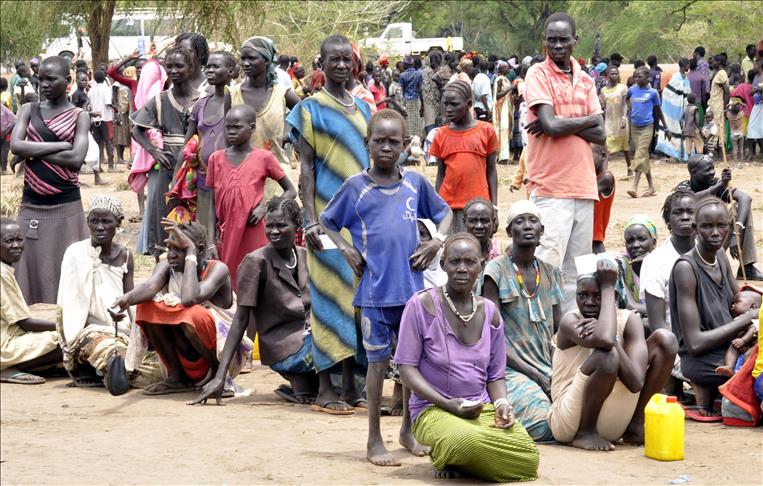
The U.N. refugee agency (UNHCR) expects more refugees from South Sudan to flee uncertainty in their homeland and cross the border into Ethiopia, noting that around 36,000 new refugees from the war-torn country arrived in Ethiopia since May.
“The ongoing conflict and worsening humanitarian situation inside South Sudan is fueling a refugee exodus into neighboring countries,” UNHCR Ethiopia spokesperson Kisut Gebregziabher told Anadolu Agency.
“Ethiopia alone received 167,000 refugees since mid-December last year with more coming every day,” Gebregziabher said, putting the number of refugees entering Ethiopia via the Pagak entry point at 800 per day.
Of the $427 million required in donor funding for South Sudan refugees in neighboring countries, Gebregziabher said, only 44 percent came in leaving a gap of 66 percent.
“Though there has been improvement in donor funding in recent weeks, the funding situation generally remained low,” Gebregziabher said.
“Refugees from South Sudan are expected to come in droves considering uncertainties in the Addis Ababa peace talks between the government of South Sudan and opposition.”
According to the latest UNHCR report on the situation in South Sudan, clashes and military mobilization in the northern Unity State and in several locations in adjacent Upper Nile State sparked a new wave of refugees into neighboring countries.
“The number of people who fled South Sudan to seek refuge in neighboring countries increased to over 400,000,” said the report. “Response efforts continued to scale up. Addressing acute food insecurity, malnutrition and life-threatening diseases including cholera and malaria are the top priorities.”
According to Gebregziabher, the UNHCR and Ethiopia's Agency for Refugee and Returnee Affairs have been scaling up efforts to address the needs of South Sudanese refugees sheltered at numerous refugee camps in the border Regional State of Gambella.
South Sudan has been shaken by violence since mid-December last year when President Salva Kiir accused his sacked vice-president Riek Machar of plotting a coup against his administration.
Hundreds of thousands of South Sudanese have since been displaced in subsequent fighting, while large swathes of the population continue to face a serious humanitarian crisis as a result of the ongoing violence.
In May, the country's warring rivals signed a peace deal brokered by the Intergovernmental Authority on Development (IGAD), a Djibouti-based East African trade bloc. The move followed an earlier cessation-of-hostilities agreement inked in January.
Neither deal, however, has succeeded in curtailing hostilities as the IGAD-mediated peace talks came to a standstill.
www.aa.com.tr/en