By Mustafa Haboosh
GAZA CITY
Gaza's parks and resorts were awash with visitors on the second day of the Islamic al-Adha feast, which started on Saturday, even as the economic conditions of the Palestinian enclave continued to deteriorate as a result of seven years of blockade imposed by Israel and a recent Israeli offensive.
In visiting the parks and the resorts, the residents of this embattled Palestinian territory seek to erase the psychological effects of the blockade and the offensive, which killed 2,157 people, from the minds of their children.
Fifty-one days after continual Israeli attacks on Gaza, Palestinian factions and the Israeli government signed a cease-fire deal in Cairo on August 26.
The deal was reached after – apart from the people who were killed during the offensive – more than 11,000 others were injured and thousands of homes and facilities were destroyed across the Gaza Strip.
Now, however, the Muslim al-Adha feast has come to bring the residents of the Gaza Strip some joy and relief from their blockade and war-related cares.
They head to public parks, amusement parks and resorts to spend some good time and offer their children an escape from the scenes of destruction and the smell of death they meet wherever they go in this part of the world.
Mohamed al-Sakani, the owner of Abu Khadra, one of Gaza's major amusement parks, said he had seen a large number of people visiting his park during this feast compared with the number of people who visited it during the minor feast about two months ago.
"This is a different feast," al-Sakani told Anadolu Agency. "Children come from every place," he added.
Al-Sakani had decided to allow visitors into the place without entry fees, given the hard economic conditions of Gaza. He also decided to reduce the price of most of the games in the park in order to encourage the largest number of people to enjoy their visit to the place.
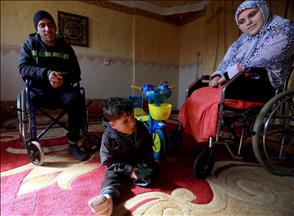
"The children are happy, even as sadness continues to make the features of the faces of some of them, particularly those who had lost their family homes during the Israeli offensive" al-Sakani said.
-Joy-
Twelve-year-old Nermin al-Mamluk looks with pain at the legacy of the latest Israeli offensive on the Gaza Strip. She says she could not get out during the minor feast (called Eid al-Fitr by Muslims), which happened to come while Israel was still launching its attacks against the homes and the facilities of the Gaza Strip.
"I am happy in this feast," al-Mamluk said. "I could get out and visit my relatives," she added.
A few kilometers away from this amusement park, thousands of Gazans of different ages also gathered inside another amusement part to celebrate the religious occasion.
Located in southern Gaza City, the Crazy Water Park, which contains several water games, is giving these people the chance to leave their fears and cares behind for a fleeting joy inside it.
Palestinian woman Nour Abdel-Hadi was one of the people who attended to the park to steal some good moments.
"Thousands of Gazans, who lost either children or relatives during the latest Israeli offensive, are still sad," Abdel-Hadi told AA. "Even with this, we must find some time for amusement for our children," she added.
Abdel-Hadi, a mother of three children, expressed hopes that the next feast would come, while the Gaza Strip had got rid of all its cares.
The Israeli blockade and the latest war had their toll on economic conditions in the Gaza Strip in destructive manners.
Gaza's unemployment has risen to 40 percent of the labor force, according to the Palestinian Statistics Center, which blames the blockade and the war for raising the Palestinian territory's poverty rate to 50 percent.
englishnews@aa.com.tr
www.aa.com.tr/en