Ilayda Cakirtekin
21 August 2026•Update: 21 August 2026
Greek farmers claimed EU livestock subsidies for tens of thousands more animals than were recorded in the country’s official statistics, POLITICO reported Thursday, deepening a wider scandal over agricultural funds.
The discrepancy concerns cattle, sheep and goats and has prompted complaints to the European Public Prosecutor’s Office (EPPO), according to the analysis.
POLITICO said the gap was particularly evident between Greece’s declining cattle herd, according to ELSTAT, the country’s statistics agency, and the number of animals covered by subsidies recorded by the Agriculture Ministry.
Ministry data showed Greek authorities paid EU subsidies for about 260,000 lactating cows in 2024, while around 70,000 cattle were slaughtered for meat that year, according to figures cited by POLITICO and confirmed by the ministry.
The analysis noted that lactating cows generally produce about one calf a year, meaning the number of calves added to the national herd should have been broadly comparable with the number of lactating cows.
Three Greek cattle breeders told POLITICO that cattle removals due to age, declining productivity or disease accounted for about 20% of the herd annually.
Given that Greece had about 600,000 cattle in 2024, according to ELSTAT, such removals would amount to around 120,000 animals.
Combined with the subsidy data, the figures would suggest the national herd should have increased by about 70,000 animals in 2024.
Instead, ELSTAT data based on annual surveys showed the cattle population continued to decline, falling from about 640,000 in 2023 to 600,000 in 2024 and 520,000 in 2025, according to figures published in June.
Nikos Dimopoulos, chairman of the Kavala Livestock Farmers’ Association, said the discrepancy could be even greater because some cattle slaughtered in Greece may have been imported rather than removed from the domestic herd.
“There’s no oversight and we cannot have an exact figure because there is no accurate data,” Dimopoulos said.
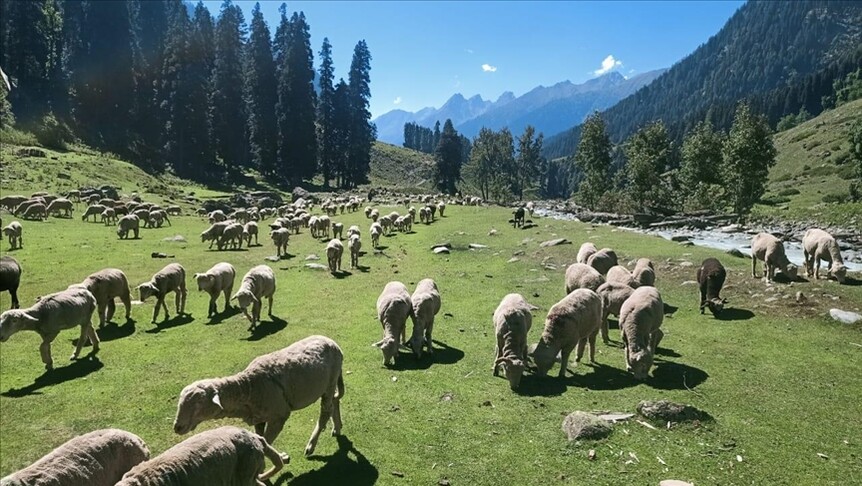
Similar discrepancies were found in Greece’s sheep and goat records. ELSTAT reported about 8.8 million animals in 2025, while around 15.7 million were registered in the government’s Integrated Veterinary Information System, according to the analysis.
“Unless we carry out a nationwide census of livestock to see what we actually have, we will not have a clear picture,” Dimopoulos said.
Complaints over the discrepancy between livestock subsidy records and the official cattle population have been submitted to the European Public Prosecutor’s Office (EPPO), according to POLITICO.
EPPO, which did not confirm whether it was investigating the discrepancy, is already handling dozens of cases related to alleged irregularities in the use of EU agricultural funds, POLITICO reported.
The cases include allegations that subsidies were obtained for pastureland that applicants did not own or lease, as well as for agricultural activities that were allegedly not conducted.
An EPPO document submitted to the Greek parliament also alleged that veterinarians and officials from OPEKEPE, the former agency responsible for distributing EU agricultural funds, were involved in manipulating livestock records.