Jo Harper
03 March 2026•Update: 03 March 2026
WARSAW
Poland’s prime minister said Tuesday that Poland does not want to be “passive” on “nuclear security in a military context,” confirming that Warsaw is in talks with France and other European partners on participation in a proposed enhanced nuclear deterrence framework.
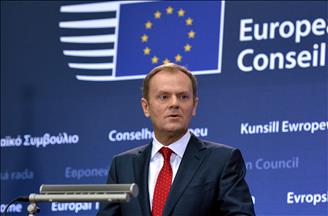
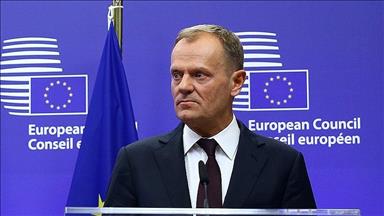
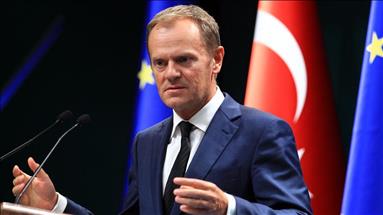
Donald Tusk told a press conference in Warsaw that the Cabinet would review information on ongoing discussions with Paris over what he described as an “advanced nuclear deterrent system.”
“Poland will not want to be passive when it comes to nuclear security in a military context,” Tusk said. “We will cooperate with our allies, including France, which has made this specific proposal, and as our own autonomous capabilities increase, we will also strive to prepare Poland in the future for the most autonomous actions possible in this matter.”
The comments follow French President Emmanuel Macron’s Monday announcement outlining a strengthened French nuclear deterrence posture and offering closer cooperation with some European allies, with Poland, Belgium, Denmark, Greece, the Netherlands, Germany, Sweden, and the UK expressing willingness to engage in discussions.
Under the French proposal, cooperation could include hosting elements of French strategic air forces on allied territory, joint exercises, and visible demonstrations of nuclear capabilities beyond France’s borders.
However, Macron said that any decision on the use of French nuclear weapons would remain the exclusive prerogative of the French president, without a shared decision-making mechanism.
Tusk said the matter is being consulted not only bilaterally with France but also with other participating states. He added that he expects to discuss the issue further at a nuclear energy summit in Paris later this month, where he will meet with Macron and other European leaders.
France has justified strengthening its nuclear deterrent posture by pointing to what it describes as the weakening of the global arms control architecture and the broader deterioration of the European security environment.
Poland, a NATO member and signatory to the Nuclear Non-Proliferation Treaty (NPT), does not possess nuclear weapons. It takes part in NATO’s collective defense structures, including discussions related to nuclear deterrence.