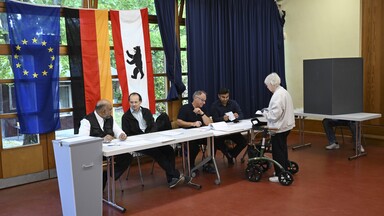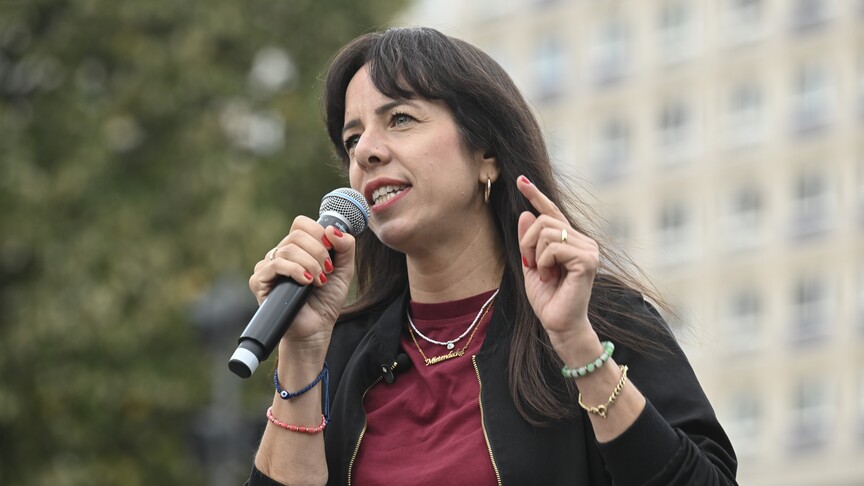
Germany’s socialist Left Party was on track for a historic first-place finish in Berlin’s state election Sunday, with lead candidate Elif Eralp hailing a result that could make her the capital’s first governing mayor from a migrant background.
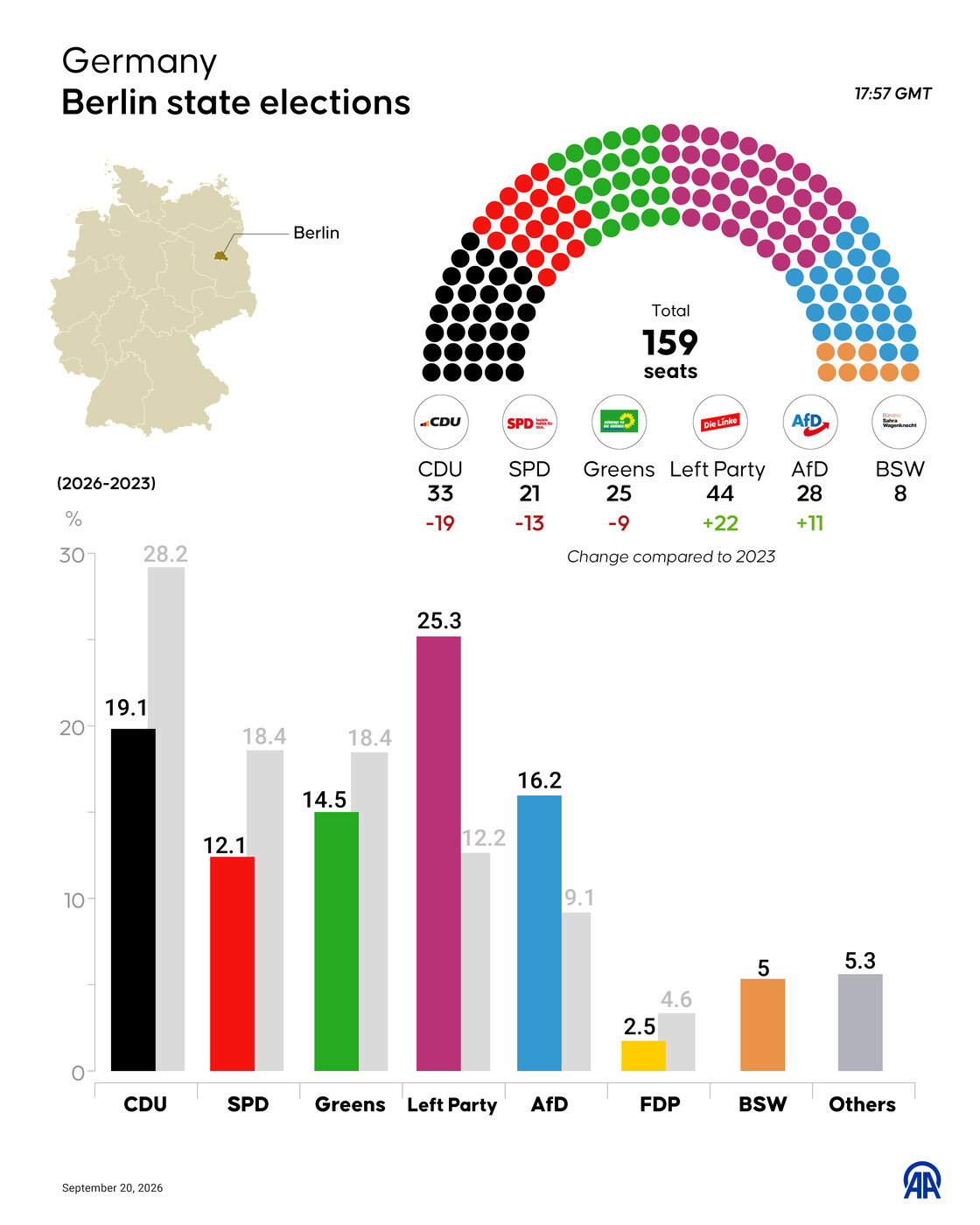
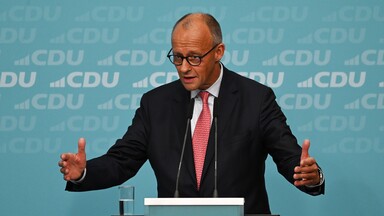
German public broadcaster ARD’s latest projection put the party at 25.6% — more than double its 12.2% result in the 2023 election — nearly seven points ahead of Chancellor Friedrich Merz’s conservative Christian Democratic Union (CDU) party at 18.9%.
The anti-immigrant Alternative for Germany (AfD) party followed at 16.1%, the environmentalist Greens at 14.3% and the center-left Social Democrats (SPD) at 12.1%, according to a projection at 11.02 pm local time. The left-populist Sahra Wagenknecht Alliance (BSW) stood at 4.7%, failing to clear the 5% threshold to enter the Berlin state parliament.
“Dear Berliners, thank you — thank you for your trust,” Eralp told supporters in a jubilant Sunday night speech. “Together, we have made history today,” she said, adding that voters had given the Left Party a mandate to form a new government.
“I stand for a social policy—a policy that brings everyone along. And the priority now is making Berlin affordable,” she said.
Eralp, a 45-year-old human rights advocate of Turkish origin, had already led pre-election polls. The early figures still surprised many, coming in several points above the strongest survey readings.
Socio-economic problems and skyrocketing prices have been among her main campaign pledges. She embraced New York Mayor Zohran Mamdani’s democratic socialist message as a campaign blueprint, with some calling her “Germany’s Mamdani.”
Eralp said Mamdani’s 2025 victory offered a model for left-wing parties worldwide, including in Germany. Both campaigns focused on fighting social injustice and making major cities more affordable.
Despite its clear lead, the Left Party remained far from an absolute majority in the state parliament and would need at least two partners to govern. After campaigning on a change of course and rejecting CDU policy, its most viable path was a three-party coalition with the SPD and the Greens.
The latest projections suggested that a Left Party–Greens–SPD alliance could take about 95 of 159 seats in the Berlin state parliament — 15 more than the 80 needed for a majority.
If the Left Party cannot reach an agreement with the SPD and the Greens, the second-place CDU could try a coalition with those two parties. A CDU-led coalition with the SPD and the Greens was seen taking about 83 seats, a slim majority.
Coalition math remained fluid before the official results. With the BSW below the 5% threshold in the latest projection, the seat distribution has shifted toward the parties already sure to enter parliament.

contact_the_ombudsman
is_there_an_error_in_this_story