Ilayda Cakirtekin
16 September 2026•Update: 16 September 2026
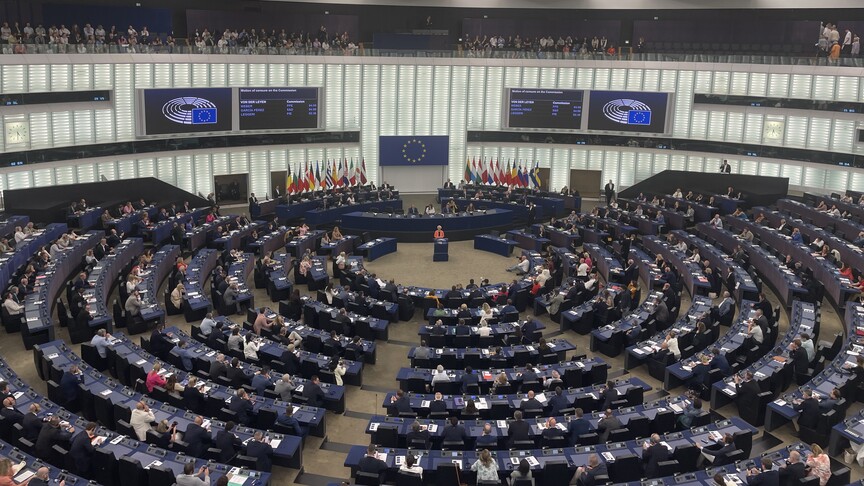
The European Parliament on Wednesday agreed to accelerate issuing permits for defense projects as part of new measures to strengthen the continent's readiness.
The legislative body approved changes to accelerate defense investment and improve the bloc's readiness to address security challenges with a package of proposals under the so-called “Omnibus V” EU simplification measures.
With the changes, the parliament sought to simplify security and defense procurement procedures and EU cooperation on defense contracts.
It agreed to accelerate the approval of permits for defense projects and the export of defense equipment between EU countries. The text was approved by 540 votes in favour, 105 against, with 22 abstentions.
The new rules will introduce an EU-wide default period for permit decisions of 42 working days, while national authorities can extend the time limit by up to 60 days in exceptional circumstances.
The parliament also agreed on measures to remove regulatory obstacles to facilitate and accelerate public procurement in defense and intra-EU transfers of defense-related products.
On defense procurement, lawmakers agreed to raise the threshold for EU procurement rules, extend framework agreements from seven to 10 years, and give member states more flexibility to carry out joint procurement.
The Parliament and Council of the European Union also agreed to consider future measures to simplify the transfer of defense products and strengthen Europe’s defense industry through EU procurement rules.
The new rules also aim to simplify the management and implementation of the European Defence Fund (EDF).
They update and clarify the criteria that defense projects must meet to receive EDF funding, with priority given to projects demonstrating high standards of excellence, quality and efficiency.
The proposals aim to support up to €800 billion ($922 billion) in defense investment over the next four years under the ReArm Europe Plan/Readiness 2030 initiative, helping EU member states and the defense industry respond to growing security challenges.