- Putin to head to Vladivostok after SCO summit as Russia seeks to expand trade, investment and transport links with Asian economies
- Indonesia takes prominent role alongside China, Mongolia, Myanmar as 80 countries set to send representatives to annual forum
More than 6,000 kilometers (3,700 miles) and seven time zones east of Moscow, Vladivostok looks out over the Pacific from a part of Russia much closer to China and the Korean Peninsula than to the country's political center.
The port city is one of the main gateways to Russia's vast Far East, a region covering roughly 40% of the country's massive territory but home to less than 8 million people.
For Moscow, developing that enormous, sparsely populated and resource-rich region has long been a challenge. But as Russia redirects more of its trade and economic ties toward Asia, the Far East is taking on greater importance as the country's gateway to markets across the Pacific.
That will be the focus when the Eastern Economic Forum (EEF) brings delegations from 80 countries to Vladivostok from Tuesday through Friday.
The gathering comes immediately after the Shanghai Cooperation Organization (SCO) summit in Kyrgyzstan, where Russian President Vladimir Putin will meet leaders from across Eurasia, including Chinese President Xi Jinping and Indian President Narendra Modi.
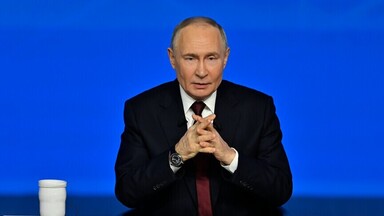
Putin will then travel to Vladivostok on Wednesday, where he is expected to hold bilateral meetings, attend the EEF plenary session and chair a launch operations at several newly built enterprises in the region.
Held annually since 2015, the EEF was established to attract investment to Russia's Far East and strengthen economic cooperation with countries in the Asia-Pacific region.
This year's forum will put particular emphasis on Southeast Asia, while delegations from China, Mongolia and South Korea underscore the range of Asian economies with interests in the region.
Its motto, The Far East: Development for the Benefit of People, also points to a more domestic challenge facing Moscow. Beyond attracting investment and developing trade routes, Russia is trying to make the region's cities and towns more attractive places to live and work.
Putin said ahead of the gathering that he hoped proposals from participants would help create new opportunities for business, improve quality of life and make Far Eastern cities and towns "more comfortable and modern."
Why does the Far East matter more now?
Russia's economic reorientation since the start of the Ukraine conflict in 2022 has given the region additional strategic weight.
With many economic relationships with Western countries curtailed, Moscow has increasingly looked toward China, India, Southeast Asia and other non-Western markets for trade, investment and political partnerships.
That shift has increased the importance of the Far East, both as a destination for Asian investment and as a route for Russian goods and energy exports moving toward markets in the region.
At the same time, the region holds some of Russia’s richest natural resources, including oil, natural gas, coal, timber, minerals and fisheries.
Transport and logistics will therefore be a major part of the EEF agenda, with discussions expected to address new corridors and infrastructure alongside broader questions of regional economic integration.
The international guest list provides another indication of the direction Moscow is looking.
Southeast Asia takes a prominent role
Indonesian President Prabowo Subianto will be the main foreign guest this year and is due to join Putin at the forum's plenary session.
Prabowo is returning to a major Russian economic forum after attending the St. Petersburg International Economic Forum in 2025, where he discussed business opportunities and expanding bilateral economic ties.
Indonesia is Southeast Asia's most populous country and one of its largest economies, making its high-level presence particularly significant as Russia seeks to deepen economic engagement with the region.
Myanmar Vice President Nyo Saw is also due to attend the plenary session, giving Southeast Asia two prominent places on this year's program.
That compares with one Southeast Asian country represented at the plenary session in each of the previous two years, Malaysia in 2024 and Laos in 2025.
China and Mongolia, meanwhile, remain regular participants, with Chinese Vice Premier Ding Xuexiang representing Beijing this year and Mongolia sending its prime minister for the second year in a row.
Organizers have also highlighted participation from countries whose relations with Moscow have deteriorated since the start of the Ukraine conflict.
Anton Kobyakov, adviser to the Russian president and executive secretary of the forum's organizing committee, told Russian media that Japan will send a delegation and that some "European businesspeople and companies" have also expressed interest in attending.
South Korea will retain a presence as well, with Ambassador to Russia Lee Sok-bae set to attend. Seoul's Unification Ministry, however, said Monday it had no plans to participate.
The forum has also attracted attention in South Korea amid speculation that North Korean leader Kim Jong-un could travel to Vladivostok for a possible meeting with Putin.
Seoul said Monday it had no information indicating Kim would attend and would continue monitoring developments.
What is on the agenda?
Amid its increasingly international profile, the EEF remains fundamentally focused on the development of Russia's Far East.
The organizers expect the signing of 380 agreements worth around 6.5 trillion rubles ($75 billion) in key areas of development.
Transport connectivity is particularly important because of the distances involved in moving goods both within the region and between Russia and Asian markets.
The forum’s discussions are expected to address the development of new transport corridors and infrastructure, alongside broader questions of regional economic integration.
Energy and natural resources will also feature prominently, alongside digitalization, artificial intelligence and other technologies Moscow hopes can contribute to the development of its eastern regions.
The agenda extends beyond major infrastructure and industry.
Discussions will also focus on human capital, tourism, culture and the creative economy, reflecting Moscow's broader effort to make the Far East not only a place to extract resources and move goods, but a more appealing region in which to live and work.