by Andrew Jay Rosenbaum
ANKARA
Global markets held gains and the euro was steady from Wednesday into Thursday, despite uncertainty caused by the Greek debacle.
The euro continued trading in a narrow band as it has all week, ranging between about 1.10 to 1.11 against the dollar. Analysts said that the euro is now seen as a reserve currency in 'risk-off' periods, taking the role that was previously played by the Japanese yen, which has been volatile since the Bank of Japan began its quantitative easing stimulus program last year.
Markets kept gains in the U.S. on Wednesday and in Asia on Thursday.
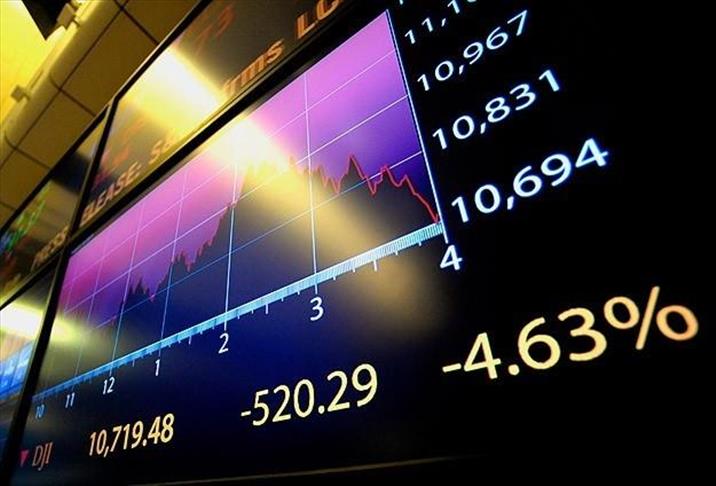
The Dow Jones Industrial Average closed 0.8 percent higher on Wednesday, the S&P 500 Index ended 0.7 percent higher; the Nasdaq Composite finished 0.5 percent up on Wednesday. The pan-European Stoxx 600 Index was 1.5 higher at closing, Germany’s DAX wound up 2.2 higher at closing and France’s CAC 40 was up 1.9 percent.
Analysts said that they did not expect the period before the Greek referendum to see much volatility in equities.
“This story won’t get too out of hand unless we start to see any evidence that the Greeks are likely to vote 'no' on Sunday. At this point the selloff could get messy. If this doesn’t happen the negativity may well be contained even if the story will be far from over,” commented Deutsche Bank analyst Alan Ruskin in a note on Wednesday,
Some might find this strong sentiment surprising, but analysts at ING say that the situation is less dire than it might seem: “Absent a last-minute miracle, Greece is looking into an unprecedented financial and political future in the coming days. Whether this future will eventually also include the ‘Grexit’ is currently impossible to tell.
“The expiration of the official bailout programme and the reimbursement of the IMF, both due on Tuesday, will in our view not automatically lead to a default and further turbulence. All involved Eurozone players will probably want to keep the situation as contained as possible, at least until the Sunday, July 5 referendum.
“Comments from Eurozone finance ministers suggest that the door for new negotiations in the days ahead of the referendum is closed, though not fully locked,” they said in a note.
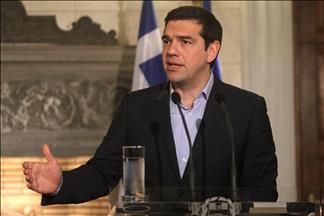
Even Tsipras' defiant speech on Greek television on Wednesday did not faze investors. Tsipras' urged citizens to vote 'no' to creditor bailout proposals, a move that he said would "open a new bright page in our history".
He denied that the referendum is a vote about exiting the eurozone (European Commission President Jean-Claude Juncker had insisted on this point in his speech on Monday) and said a ‘no’ vote would give him more leverage in negotiations with creditors.
The prime minister also said he remains at the negotiating table, although later that day the Eurogroup warned that there would be no further negotiations until after the referendum.
Investors can confidently await the referendum, because 21,000 people demonstrated in favor of a 'yes' vote on Tuesday night in Athens, according to Greek police statistics.
While current opinion polls in Greece show that the chance of a 'no' vote is slightly ahead of a 'yes' vote, the gap is closing. In a poll published Wednesday sponsored by BNP Paribas, 47.1 percent were planning to vote ‘yes,’ and 43.2 percent said they would vote ‘no,’ with remaining voters polled undecided.
What's more, in case of a 'yes' vote, Tsipras has promised that his government will resign, thus paving the way for new faces at the negotiating table, who will be backed by a popular mandate to reach an agreement with creditors.
The Greek government's failure to pay its €1.5 billion ($1.7 billion) in obligations to the International Monetary Fund has not yet caused much turmoil on markets.
This is because, as Lombard Street Research economist Konstantinos Venetis pointed out in a note on Monday, Greece has not defaulted, in a technical sense, because no private investors have lost money – private holders of Greek government paper are protected from losses under an agreement with the institutional creditors.
Greece has simply fallen into arrears, meaning that it will get no further IMF funding until it pays the outstanding debt.
Investors are putting their money on an eventual solution after the referendum, Venetis said.
However, he warned that investor confidence may not last, if there is more turmoil from Greece and the creditors. "Markets do not price political risks smoothly," he added.
There is certain to be further turmoil, however, around Greek banks – some of which may fail as aid from the European Central Bank has been capped. With Greek banks all closed this week, there are reports that at least one major bank may not be able to open next week.
A bank failure could be the straw that broke the camel's back for investors.