Mahmut Cil and Emir Yildirim
17 June 2025•Update: 17 June 2025
ISTANBUL
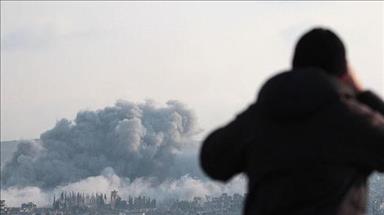
Growing tensions in the Middle East are amplifying fears of both inflation and a recession, as Israel and Iran exchange attacks in a conflict that began last Friday.
On June 13, Israel launched large-scale strikes targeting Iran’s military command, nuclear facilities and several cities. In retaliation, Iran fired 370 ballistic missiles.
Investors remain uncertain about how long the conflict will last and how it will affect global asset prices.
A key concern is the potential closure of the Strait of Hormuz, a vital waterway through which nearly one-third of the world’s oil and liquefied natural gas (LNG) is transported. Disruption there could trigger major supply shocks across industries, particularly manufacturing.
The potential rise in oil and natural gas prices, alongside heightened uncertainties, could fuel inflationary pressures and put downward pressure on key macroeconomic indicators.
The conflict between Israel and Iran pushed the price of Brent crude oil up 11.1% to $73.7 per barrel, registering the largest weekly rise since Oct. 3, 2022.
Natural gas prices in Europe began the week with a hike. Dutch virtual trading hub TTF saw the price of gas per megawatt-hour for July contracts rise 3.2% to 39.1 euros ($45.34).
Joachim Nagel, president of Germany’s Bundesbank, warned that, while the immediate impact of the Israel-Iran conflict on oil prices is significant, longer-term consequences remain uncertain.
Analysts say a potential crisis in the Strait of Hormuz could derail the post-pandemic global economic recovery.
- Historical echoes: The 1973 oil shock
Past conflicts have similarly reshaped global markets.
In October 1973, the Yom Kippur War between Egypt and Israel erupted after Israel refused to withdraw from territories it occupied during the 1967 Six-Day War.
In response, Arab countries led by Egypt and Syria launched attacks to reclaim the Sinai Peninsula and the Golan Heights.
Consequently, the Organization of Arab Petroleum Exporting Countries gathered in Kuwait and announced an oil embargo targeting Israel and its allies. The group also called for a 5% reduction in oil production each month until Israel withdrew from the occupied region and Palestinian rights were secured.
The embargo triggered a 400% increase in oil prices, sending shockwaves through the global economy.
Industrialized nations, especially the US, struggled due to their oil-dependent production systems. Inflation surged, and shortages spread across Western economies.
Major US automakers halted production, while Japanese automakers gained a competitive edge in the market with smaller engine-sized models.
The US also imposed a speed limit of 90 kilometers (55.9 miles) per hour on highways in 1974 to reduce oil consumption.
Companies sought alternative sources of oil and invested in generating energy from coal and nuclear reactors.
The New York Stock Exchange lost around $100 billion during the oil price hikes of 1973-74.