Ali Canberk Ozbugutu and Burhan Sansarlioglu
15 June 2026•Update: 15 June 2026
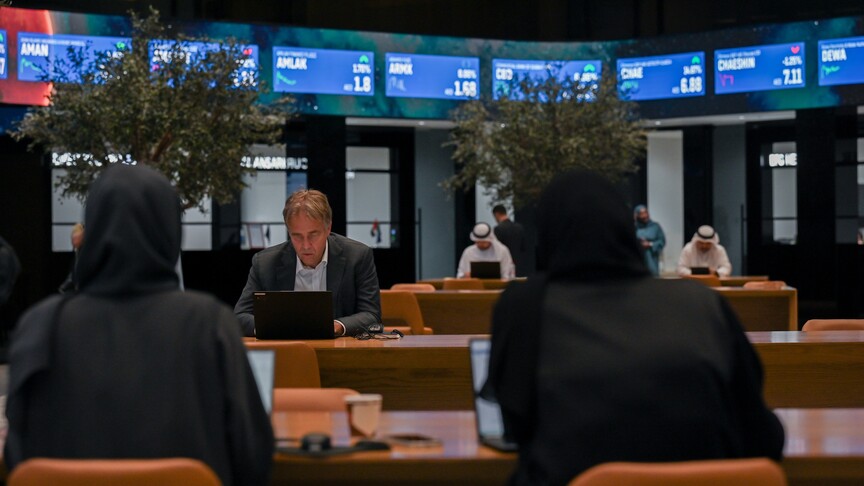
Global markets rallied on Monday after the US and Iran announced a peace agreement, sending oil prices sharply lower and sparking a broad return to risk assets from Wall Street to Türkiye.
Optimism surged after US President Donald Trump announced that a peace deal had been finalized and that the Strait of Hormuz would reopen, while Iranian Deputy Foreign Minister Kazem Gharibabadi confirmed that Tehran and Washington would sign a memorandum of understanding in Switzerland on Friday.
The announcements marked the first time both sides publicly confirmed that an agreement had been reached, easing concerns over the longevity of a deal and fueling expectations that energy supply risks could ease.
Risk appetite returns
Seda Yalcinkaya Ozer, strategy and investment advisory manager at Yatirim Finansman, told Anadolu that investor appetite for risk returned rapidly as fears over energy supply disruptions faded.
Ozer said the prospect of easing Middle East tensions pushed oil to a three-month low and triggered a relief rally across global markets.
"We saw acceleration in aviation, transportation, banking and shares that are most sensitive to declining oil prices, as well as in holding companies and interest-rate-sensitive stocks," she said.
"Refinery and energy sectors saw pressure on inventories and margins due to falling oil."
European stock markets traded higher as investors welcomed the prospect of reduced geopolitical tensions and fewer disruptions to global energy supplies.
In the US, futures pointed sharply upward. Nasdaq 100 futures rose 2%, while S&P 500 futures gained 1.2% and Dow Jones futures climbed 0.9%.
The decline in oil prices also helped push US Treasury yields lower as investors anticipated easing inflationary pressures. The benchmark 10-year Treasury yield fell to 4.41%, its lowest level since May 12.
Türkiye among key beneficiaries
Turkish assets were among the strongest performers as investors responded positively to the prospect of lower energy costs and improving regional stability.
The BIST 100 index opened 3.02% higher at 14,359.48 points, while the banking index surged 6.41% and the holding index gained 3.11%.
Transportation stocks also rallied more than 5% as declining fuel costs improved the sector's outlook.
Banking shares also benefited from reports that legal proceedings involving Türkiye's Halkbank could move toward resolution following developments in a US court.
The BIST 100 rose to 309.5 points in US dollar terms, its highest level since May 18.
Türkiye's five-year credit default swap (CDS), a measure of sovereign risk, fell to 225 basis points, its lowest level since Feb. 26.
"Türkiye's CDS hit its lowest level in three and a half months, and if global risks continue to slow down, the Turkish Central Bank may cut rates," Ozer said.
"In this scenario, the index could bottom out at 13,700 before attempting another push towards 15,000."
Focus shifts to central banks
Investors are now turning their attention to upcoming central bank decisions.
The Bank of England is expected to keep interest rates unchanged at this week's policy meeting, although analysts say a rate increase later this year could remain a possibility if geopolitical risks re-emerge and energy prices rise again.
In the US, all eyes are on the Federal Reserve's first policy meeting under new Chair Kevin Warsh. Markets broadly expect rates to remain unchanged.
Currency market pricing currently suggests a 73% probability that the Fed will raise rates by 25 basis points in December due to strong employment and rising inflation, although those expectations have eased following the latest geopolitical developments.
Analysts say a hawkish tone from Warsh could still support demand for the US dollar.
Commodities react
Commodity markets also responded strongly to the prospect of easing tensions in the Middle East.
Brent crude oil fell 4.1% to $82.1 per barrel as expectations grew that the reopening of the Strait of Hormuz would ensure stable global energy supplies.
Copper gained 0.6% to $6.49 per pound, benefiting from optimism over global growth prospects.
Precious metals also advanced. Gold rose 3.1% to $4,339 per ounce, silver gained 4.1% to $70.7, platinum climbed 3.5% to $1,781 and palladium jumped 4.7% to $1,347.6.
Aluminum, however, fell 1.7% to $1.57 per pound.
*Writing by Emir Yildirim