Riyaz ul Khaliq
31 August 2026•Update: 31 August 2026
Nepal has sought freezers, DNA testing kits, remote sensing technology and drones to map disaster-affected areas amid a mounting death toll from devastating flash floods in the Himalayas.
During a press briefing on Monday, Nepal’s Foreign Ministry spokesperson Lok Bahadur Poudel Chhetri announced that the government has officially requested essential non-food items and specialized technical services from international partners. Kathmandu requested freezers, DNA testing kits, and LiDAR technology from the US, Disaster Victim Identification assistance from Singapore, and Bailey bridges and high-capacity drones from China and Singapore to support ongoing recovery operations.
He added that Nepal had received airtight bags for managing the dead bodies, and "more are also being delivered."
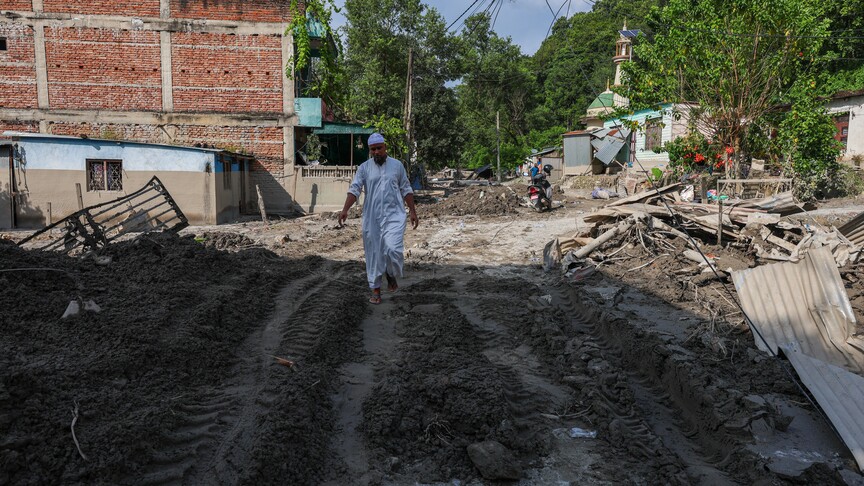
The disaster struck on Aug. 26 when a glacier on Nepal’s Mount Langtang Lirung fractured at an altitude of about 5,200 meters, triggering an ice-rock avalanche that developed into a massive debris flow and swept through valleys along the border.
The huge surge of water, along with mudslides, devastated Rasuwa, Nuwakot, Dhading, Kavre and the Kathmandu Valley in Nepal, while also burying the Gyirong border area in China's Tibet region.
Kathmandu’s request comes as the country’s National Disaster Risk Reduction and Management Authority reported 903 deaths and 4,247 people, including 592 foreigners from 39 countries, still missing.
Beijing has confirmed 16 deaths while 546 people, including 261 foreigners, remain missing.
The combined figures put the death toll at 919 and the number of missing at 4,793, including 853 foreigners.
At least 933 personnel, including workers from India and China, remain unaccounted for at several disaster-hit hydropower projects on the Nepalese side of the border,
Chhetri said the damage caused by the floods “is extensive,” according to a transcript of his news conference.
“A preliminary assessment of the needs is currently underway and a detailed Post-Disaster Needs Assessment (PDNA) will be carried out for the actual figures for rehabilitation and reconstruction of those critical infrastructure, like houses, road networks, bridges and hydropower facilities have been damaged,” he said.
The spokesman emphasized that Nepal “indeed needs assistance and support for rescue and relief operations, in areas like tunnel rescue, freezers, LiDAR, DNA and forensic expertise.”
“Later during the rehabilitation and reconstruction phase, we will require a significant level of support, which will be determined by PDNA,” Chhetri added.
China said Monday it “is making every effort to search for and rescue those unaccounted for both within the country and abroad.”
"Intensive search, rescue and relief operations are still underway in an orderly manner in the disaster-hit areas. China has been open, transparent and timely in information release. Smear and disinformation is most unwelcome at a time of disaster response," China's Foreign Ministry spokesperson Guo Jiakun told reporters in Beijing.