12 January 2019•Update: 13 January 2019
By Md. Kamruzzaman
DHAKA, Bangladesh
Ignoring concerns of Bangladeshi authorities and Rohingya refugees and in flagrant violation of international law, Myanmar has been constructing a concrete structure in the land on its border with Bangladesh’s Ghumdhum area, media reported.
The structure will obstruct the flow of canal Khal in the area, causing of flooding and over 5,000 Rohingya refugees -- who have been living in the makeshifts since August 2017 -- are at the risk of washing out.
Rohingya leader Dil Mohammad told Anadolu Agency that it is the new tactic of the Myanmar army to oust the Rohingya living there.
“We are living here with the hope that situation will calm down and we will get back our citizenship rights and return to our original birthplace, Rakhine,” Mohammad said.
Since the beginning, he said, Myanmar armies have been trying to create panic among them so that they left the place.
Kamal Ahmed, commissioner of Bangladesh’s Cox's Bazar, has sent a letter to the cabinet secretary on Tuesday, expressing concern over the construction work and its possible consequences, according to local newspaper the Daily Star.
“The Myanmar government cannot set up any structure on the land. If the structure is built, the Rohingya in land will face sufferings as the whole area will go ,” Ahmed told the daily on Wednesday.
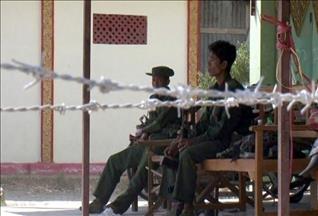
Lt. Col. Monzurul Hasan Khan, commanding officer of Bangladeshi Border Guard’s 34 Battalion, told Anadolu Agency that he has personally visited the spot recently and Myanmar army has informed him about setting up barb-wire fences and not structure.
“This type of barb-wire fences are also set up on other between Bangladesh and Myanmar,” Khan said, adding that he is not aware of of any concrete structure.
“We have just come to know about such a structure through media, let us check the matter,” he added.
Prof. Mahfuzur Rahman Akand of Rajshahi University told Anadolu Agency it is “very unfortunate that Myanmar is trying to vitiate the life of Rohingya refugees even outside [the country].”
“No country can carry out any construction work in land without a bilateral agreement between the concerned countries,” Akand added.
Persecuted people
The Rohingya, described by the UN as the world's most persecuted people, have faced heightened fears of attack since dozens were killed in communal violence in 2012.
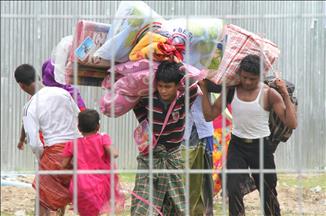
According to Amnesty International, more than 750,000 Rohingya refugees, mostly women children, have fled Myanmar and crossed into Bangladesh after Myanmar forces launched a crackdown on the minority Muslim community in August 2017.
Since Aug. 25, 2017, nearly 24,000 Rohingya Muslims have been killed by Myanmar’s state forces, according to a report by the Ontario International Development Agency (OIDA).
More than 34,000 Rohingya were also thrown into fires, while over 114,000 others were beaten, said the OIDA report, titled "Forced Migration of Rohingya: The Untold Experience."
Some 18,000 Rohingya women and girls were raped by Myanmar’s army and police and over 115,000 Rohingya homes were burned down and 113,000 others vandalized, it added.
The UN has also documented mass gang rapes, killings – including of infants and young children – brutal beatings and disappearances committed by Myanmar state forces.
In a report, UN investigators said such violations may have constituted crimes against humanity.