Ekip
19 February 2016•Update: 20 February 2016
By Mahmut Atanur
BEIJING
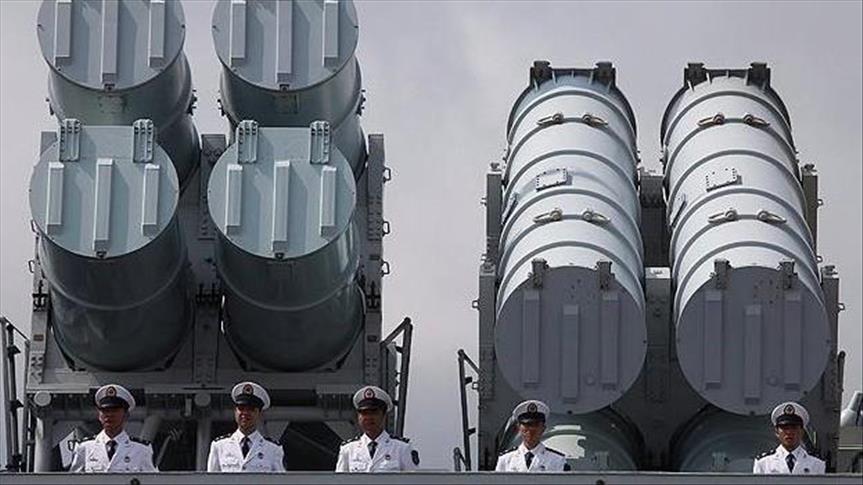
China has once again underlined its sovereignty over disputed islands in the South China Sea, while denying United States claims that it has deployed an anti-air missile system on them.
In response to a question regarding commercial satellite image provided by the U.S. that claims to show missiles were recently deployed, Foreign Ministry spokesman Hong Lei told a daily press briefing that China's sovereignty over the area is backed by solid historical and jurisprudential evidence.
"China is earnest and serious in saying that it has no intention of militarizing the Nansha Islands," he added.
"But, just as Foreign Minister Wang Yi pointed out the other day, non-militarization should not target a single country, and should not be applied with double or multiple standards. It needs the joint efforts by relevant countries inside and outside the region."
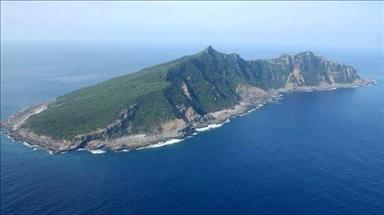
China has raised tensions with the U.S. and its neighbors by embarking on construction of man-made islands and airstrips on the Paracels, which are claimed by China, Taiwan and Vietnam.
The Paracels themselves are part of a group of reefs, islets, atolls, cays and islands that China refers to as the Nanshas, but others call the Spratlys.
U.S. Secretary of State John Kerry on Wednesday called on all claimants to practice a policy of "no militarization" in the waters, noting that Chinese President Xi Jinping's had said during a visit last year to Washington that China would not militarize the South China Sea.
"But there is every evidence every day that there has been an increase of militarization of one kind or another. It’s of serious concern ... we’ve had these conversations with the Chinese, and I’m confident that over the next days we will have further, very serious conversation on this," he added.
On Friday, the Chinese Foreign Ministry spokesman said that it was the U.S. not China, that is increasing its military presence in the area.
He accused Washington of sending military planes and vessels to the area to conduct close-up military surveillance, of dispatching missile destroyers and bombers to the airspace and waters near or even inside relevant islands and reefs, and trying to talk its allies into carrying out highly targeted joint military exercises and patrols in the sea.
"It is those actions, which heightened tensions in the South China Sea, that are militarizing the South China Sea," he added.
Since October, two U.S. warships have sailed close to Chinese claimed features in "freedom-of-navigation operations" that Beijing has called "provocative".
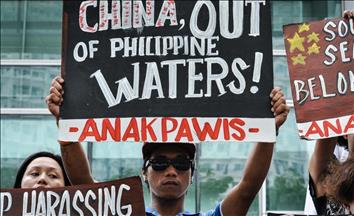
Among claimants of other islands in the Spratly chain are the Philippines, which has taken the quarrel over ownership of the islands – which Manila calls the West Philippine Sea -- to the International Tribunal for the Law of the Sea in The Hague.
China has asserted that the tribunal has no jurisdiction over the sea dispute, and has refused to participate in its hearings.
On Friday, Hong sought to underline that Yongxing Dao -- a Nansha island that others refer to as Woody Island, or Phu Lam Island -- is China's inherent territory.
"In 1959, the Chinese government set up administrative office and later government facilities on Yongxing Dao," he said.
"For several decades, China has been carrying out construction and setting up necessary defense facilities there.
"The relevant country and person should know well enough about the historical records and basic facts of the South China Sea before making statements."