Sm Najmus Sakib
03 November 2026•Update: 03 November 2026
- Protesters block roads, clash with police, forcing owners to shut dozens of factories
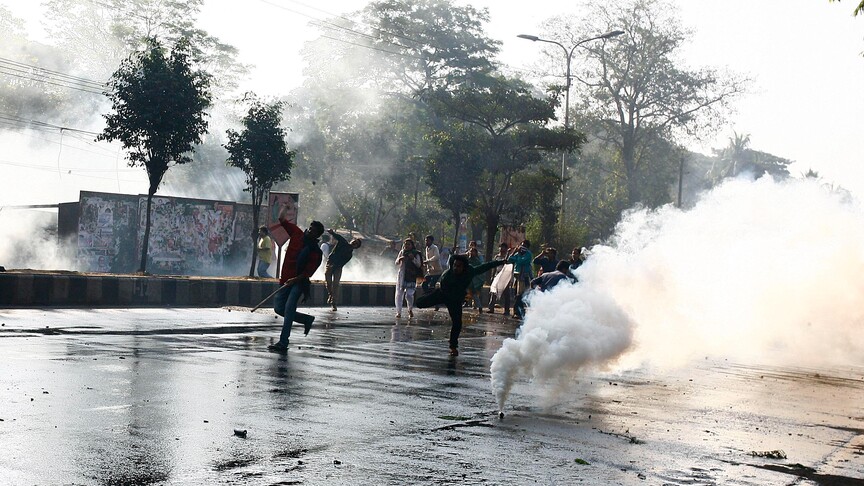
Garment workers in Bangladesh entered the third day of their strike on Tuesday on the outskirts of the capital Dhaka, demanding a 100% increase in the minimum wage.
They blocked streets around factory hubs and along major roads, including in the Mirpur neighborhood and the industrial areas of Savar, Gazipur and Ashulia.
Clashes with police were reported in several areas, and several protesters were arrested.
Earlier on Monday, police said they had arrested about 50 men, including members of the banned Awami League party, led by ousted Prime Minister Sheikh Hasina.
Workers have been protesting since Sunday. They are demanding a minimum monthly wage of 30,000 taka ($243), more than double the current wage of ($101), as the cost of living continues to rise.
At least 50 factory owners in Gazipur announced that their employees would be given leave due to the unrest in the area, the daily Prothom Alo reported.
Meanwhile, two Dhaka Metrorail stations were closed for several hours following clashes between protesters and police.
Home Minister Salahuddin Ahmed said the workers' demands had been "met and a wage board has been constituted for this purpose."
He told reporters in Dhaka that discussions had been held with nearly all representatives of workers and factory owners, and that "both sides are satisfied with the outcome."
He warned that legal action would be taken against anyone attempting to shut down garment factories, adding that authorities would work to reopen factories that had already been closed as soon as possible.
Bangladesh's ready-made garment industry, worth more than $38 billion, is the country's main economic pillar and the world's second-largest exporter after China.
It employs about four million workers, accounts for more than 80% of the country's total exports and contributes 7.82% of nominal gross domestic product (GDP).