Maryam Ashalem de Andres
22 August 2026•Update: 22 August 2026
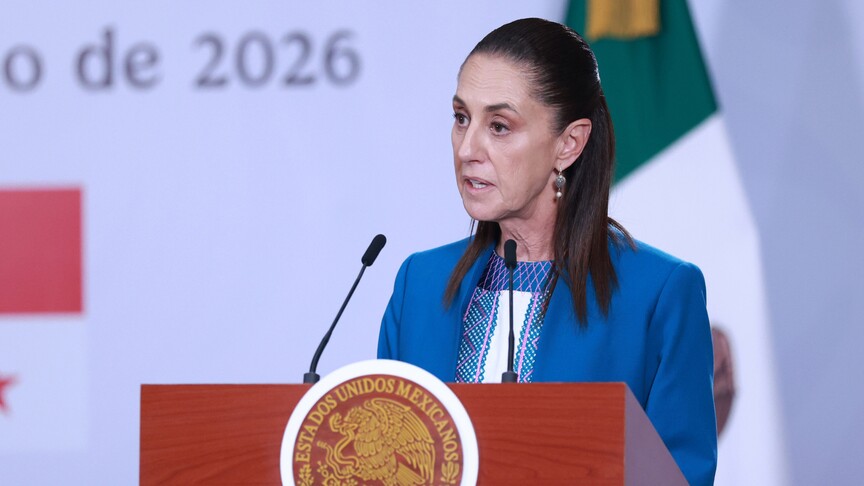
Mexican President Claudia Sheinbaum on Thursday defended her decision to abstain from an Organization of American States (OAS) vote on Nicaragua.
She said it was based on the constitutional principles of self-determination and non-intervention.
“It is a matter of self-determination,” said Sheinbaum.
The OAS Permanent Council approved a resolution Wednesday for an urgent meeting of foreign ministers to address the political situation in Nicaragua.
The measure received 29 votes, while Brazil voted against, and Mexico abstained. Haiti and Venezuela were absent from the vote.
Mexican representative to the OAS, Alejandro Encinas, defended the abstention during the session, saying “Nicaragua’s internal situation does not constitute a threat to hemispheric peace or security,” according to the Mexico Solidarity newspaper.
He argued that Mexico did not support convening a meeting on Nicaragua without clarity on what measures could be taken against a country that no longer belongs to the OAS, it said.
Sheinbaum ruled out seeking dialogue with the Nicaraguan government on democracy, saying Mexico “would have no reason to do so” because it is “a decision for Nicaraguans themselves,” said the Forbes Mexico publication.
The OAS initiative came after Nicaraguan President Daniel Ortega announced July 19 that elections would not be held in 2026, despite general elections having been scheduled for November.
A constitutional reform approved in 2025 extended Ortega's presidential term and established his wife, Rosario Murillo, as co-president. The reform also moved the elections to November 2027.
The US, Argentina, Panama, Paraguay and Uruguay promoted the initiative after an earlier attempt to advance a similar measure failed to secure sufficient support on Aug. 5.
The OAS resolution adopted Aug. 19 said representative democracy, which the organization considers essential for the stability, peace and development of the region, “no longer exists in Nicaragua.”
Nicaragua’s withdrawal from the OAS took effect in November 2023, following years of tensions with the organization about democratic governance and human rights concerns.