“I feel ashamed on my refusal to participate in anti-polio campaign. But I had no other option. I can either administer anti-polio vaccine or save my life”, Dilawar Khan, one of around 70 anti-polio workers who have refused to participate in fresh anti-polio campaign to be launched from Saturday in northwestern Khyber agency tribal area told Anadolu Agency.
Not only in Kyber agency, but anti-polio workers have also refused to administer vaccine in restive Waziristan, and other tribal regions fearing militants attacks.
“I feel frightened. Security situation is not conducive for vaccination campaign here”, Dilawar said referring to killing of two anti--polio workers in December 2013 in Jamrud town of Khyber agency.
Militants had attacked a senior World Health Organization (WHO) official in southern port city of Karachi in December 2012 compelling the foreign anti-polio workers to either halt their operations or leave the country.
The militants’ ban on anti-polio vaccination was the outcome of ongoing US drone attacks and a fake anti-polio vaccination campaign launched by a CIA agent Dr Shakil Afridi to locate the slain Al-Qaeda chief Osama Bin Laden who was killed in a US Navy Seal’s operation in northwestern garrison city of Abbotabad on May 2, 2011.
Taliban have attached lifting of ban on vaccination with drone strikes that have killed over 3,000 people, of which, according to international and national think tanks, 70 percent were civilians. However, drones have targeted some key Taliban and Al-Qaeda leaders including Baitullah Mehsud, and Hakeemullah Mehsud, the two chiefs of formidable Tehrik-e-taliban Pakistan (TTP), a conglomerate of various Taliban groups operating on Pakistan’s soil.
The ban, understandably, has raised fear of rise in number of polio cases in tribal areas, especially in restive Waziristan because out of over 187 poliocases reported in 2013 in Pakistan, half were reported from KP province, and northern tribal belt.
“We will not administer vaccination until either Taliban announce lifting of ban or foolproof security measures are taken to save our lives”, Dilawar maintained.
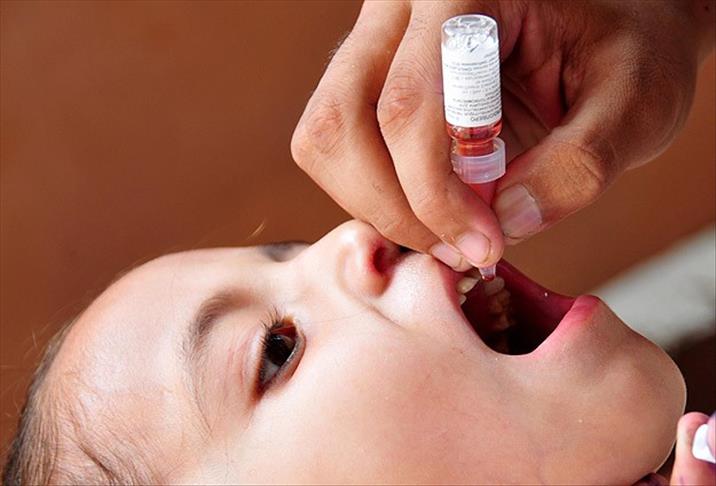
Currently, Pakistan is one of the only three countries, following war-stricken Afghanistan, and Nigeria, where polio remains endemic. Authorities fear that the so-called ban imposed by militant groups may affect over 163,000 children below 5 years in the region. The poliomyelitis (polio) vaccine protects againstpoliovirus infections.
The vaccine helps the body produce antibodies (protective substances) that will prevent an individual from contracting polio.
The highly infectious disease affects mainly the under-fives and can cause paralysis in a matter of hours. In some cases, it can turn fatal.
The government is using both conventional and unconventional ways that include the help of local religious scholars to woo the militants to allow the anti-polio vaccinators to administer vaccine to the children in Waziristan region, which have yielded some results. Local administration claims that some Taliban groups, including Ansar-ul-Islam defying the TTP warning are cooperating with administration vis-à-vis anti-polio campaign in tribal areas.
by Aamir Latif