By Oguzhan Ozsoy
ANKARA
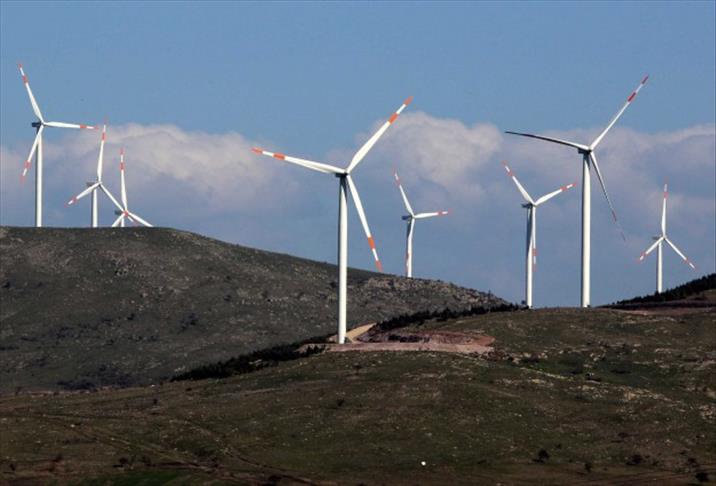
The U.S. increased its wind energy capacity in 2013 by 19 percent over 2012, according to preliminary data released April 15 by the U.S. Energy Information Administration's March Electric Power Monthly report.
167 million MegaWatt-hours (MWh) of power were generated from wind energy in 2013 in the U.S., and wind power also increased its share of American total electricity generation last year from 3.5 percent to 4.1 percent. In 2013, twelve states produced 80 percent of U.S. wind-generated electricity, reaching a total of 134 million MWh. One 1 MWh of energy can sustain roughly 1000 homes, at American average consumption rates, for one hour.
The U.S. Energy Information Administration says Texas was once again the state with the greatest exploitation of wind energy at nearly 36 million MWh of electricity generated in 2013. Iowa was second, with more than 15 million MWh, followed by California, Oklahoma, Illinois, Kansas, Minnesota, Oregon, Colorado, Washington, North Dakota and Wyoming.
The rise of the wind sector in 2013 will have a positive environmental impact in the U.S., according to the American Wind Energy Association’s 2013 Annual Market Report.
Operational wind energy projects, combined with the projects under construction, will avoid 115 million tons of carbon dioxide emissions annually — more than 5 percent of U.S. power sector emissions — while avoiding the consumption of over 36 billion gallons of water each year, because wind turbines use virtually no water in operation.
Between 1950 and 2011, the energy intensity of the United States – measured as energy consumption per unit of gross domestic product – dropped by 58 percent per real dollar of GDP, according to the US Energy Information Administration. It's largely the result of Americans using more efficient cars and appliances, and energy intensity is expected to continue to decline in coming decades.
Meanwhile a report issued Sunday by the United Nations' Intergovernmental Panel on Climate Change (IPCC) suggested that energy efficiency is a "key mitigation strategy" in keeping global carbon emissions within a safe range through the end of the 21st century.
Building energy use accounted for nearly a third of the world's total energy use in 2010, and 6.4 percent of greenhouse-gas emissions. As emerging economies across the globe continue to develop higher standards of living, cumulative global energy demand for buildings is projected to double, and carbon dioxide emissions to increase globally by 50 percent to 150 percent by 2050, according to the IPCC report. Retrofitting old buildings to become more efficient, and making sure new ones are built to higher standards, can help keep that energy demand in check, according to the IPCC.
By 2050, better everyday energy habits could cut in half the developed world's building energy demand from today's levels. Most of these measures are inexpensive and often recoup their upfront costs over time. They may have other side benefits like increased economic productivity and energy security.
According to the Global Wind Energy Council, the three leading countries, China, U.S and Germany collectively generated 60 percent of the total world wind energy power in 2013. China ranks first with 91 gigawatts (GW) in installed generation capacity. The U.S. ranks second in the world with nearly 61.0 GWs and Germany is third with 34.2 GWs in wind power capacity. At the end of 2013, cumulative global wind energy capacity reached a total 318.1 GW.
"Using energy more sensibly not only reduces costs but can improve productivity and quality of life," Timothy Wirth, vice chairman of the United Nations Foundation, said in a statement. "Cleaner energy sources – renewable energy, especially wind and solar, as well as the least carbon-intensive fossil fuel, natural gas – are increasing their penetration of the world’s energy markets, too slowly but with increasing momentum."
Mustafa Serdar Ataseven, Chairman of the Turkish Wind Energy Association (TWEA) told AA that wind power was the right choice in the struggle with global warming, as wind power didn't damage environment or produce carbon emissions in the atmosphere. Ataseven stated that global industrial and technological developments were leading to increased energy needs in countries around the world, and "Turkey aims to supply 20 percent of its total energy demand from wind energy by 2023."
"Turkey currently meets 4.5 percent of electricity demands (around 11 million MWh) from wind power," said Ataseven, adding Turkey currently has around 3000 MW in wind capacity and the country aims to increase capacity by around 1000 MW, to reach a total of nearly 4000 MW at the end of 2014.
In Turkey, 1 million MWh of power supplies the electricity needs for approximately half a million homes. Turkey has over 61m000 Megawatts (MWs) of total installed capacity in electricity from renewable energy sources, and aims to supply 30 percent of its total energy demand from renewable energy, including wind, solar, hydro power etc.
englishnews@aa.com.tr
news_share_descriptionsubscription_contact