WASHINGTON
Washington is confident that an agreement between Iran and the UN’s nuclear watchdog will not undermine efforts by world powers to prevent Tehran from obtaining a nuclear weapon.
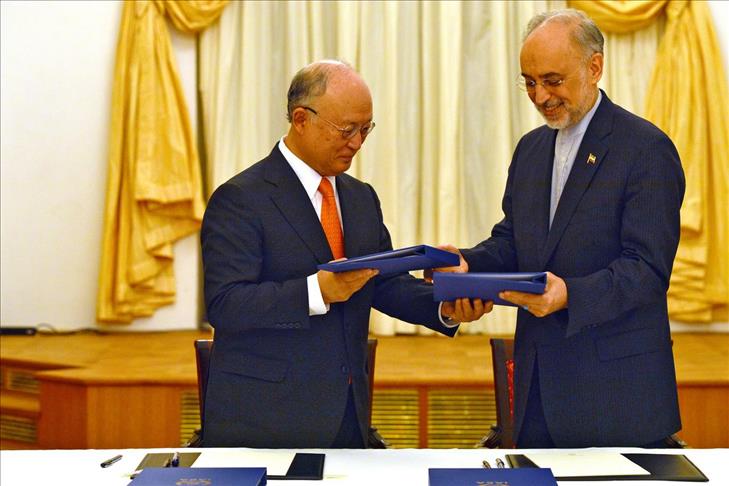
National Security Advisor Susan Rice said Washington has been briefed on the agreement between the International Atomic Energy Agency and Iran, which is not public, and is content with the briefings.
“We're satisfied with them and we will share the contents of those briefings in full in a classified session with the Congress,” Rice told reporters. “There's nothing in that regard that we know that they won't know.”
Secretary of State John Kerry, Energy Secretary Ernest Moniz, Treasury Secretary Jack Lew, and an unnamed intelligence official, were on Capitol Hill Wednesday where they briefed lawmakers in a classified setting on the Iran deal.
The administration has sought to ramp up congressional support for the agreement during Congress’ 600-day review period, which began Monday.
In a Washington Post op-ed published Wednesday, Kerry and Moniz said that without the agreement “Iran could produce enough weapons-grade plutonium each year for one to two nuclear weapons. With it, Iran will not produce any weapons-grade plutonium.”
The United Nations Security Council adopted a resolution Monday endorsing the deal that places long-term curbs on Iran's nuclear program in exchanging for relief from biting economic sanctions.
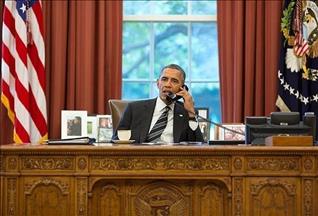
President Barack Obama, who has threatened to veto legislation that undermines the deal, said the approval of the deal by the Council would help his push to gain congressional support.
Congress requires a two-thirds majority vote in the House and Senate to override a presidential veto.
Three weeks 'enough to check Iran’s nuclear activities'
Three weeks is enough time to inspect any nuclear-related activities of Iran, U.S. Secretary of Energy Ernest Moniz said Wednesday.
Moniz remarks come amid an ongoing criticism that 24 days of warning-time was not enough to check Iran’s nuclear program.
In an interview with an online magazine, he said that his energy specialists had conducted experiments to see how hard it would be to detect radioactive residue left behind at nuclear sites.
The result, he said, was that three weeks wouldn't be enough time for Iran to be sure it had covered all its tracks.
“It is essentially impossible, certainly with confidence, to believe that you’re going to do this kind of work with nuclear materials and be confident at having it cleaned it up,” Moniz said.
He added that inspections were critical to the agreement, which were only part of a larger monitoring regime that had the authority to watch several points along the assembly line toward a nuclear weapon.