By Dilrukshi Handunetti
COLOMBO, Sri Lanka
Sri Lanka's two main political alliances both believe they can seize a majority in a hotly-contested general election as the country's electorate goes to the polls on Monday.
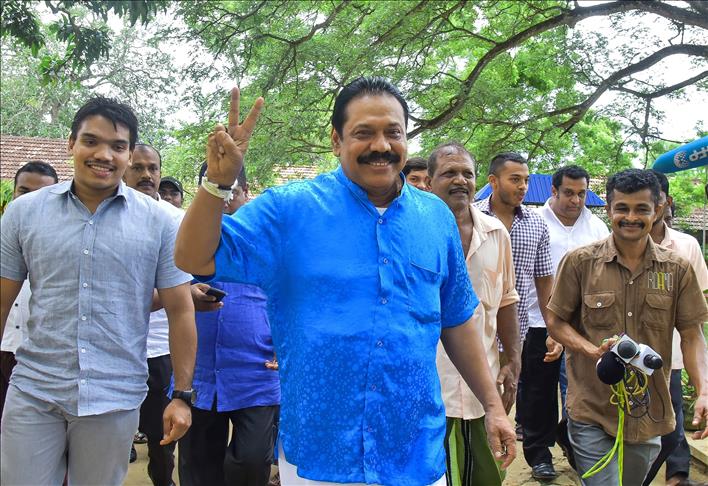
The focus of the election lies on controversial former President Mahinda Rajapaksa, who was voted out in January in favor of his reform-minded former ally Maithripala Sirisena but is hoping to return to power as prime minister, a role that has been strengthened by Sirisena's reforms.
But the current ruling coalition, the United National Front (UNF), is confident of a win which would allow them to set up a national unity government requested by Sirisena but rejected by the Rajapaksa and his opposition United People's Freedom Alliance (UPFA).
“The UNF has, in its seven and a half months, proved to the people that it is trustworthy and committed. We have made a strong attempt to strengthen democratic institutions, introduced a vital constitutional amendment that reduced the excessive powers of the executive president and strengthened the independent commissions,” said Cabinet Spokesman and Health Minister Dr. Rajitha Senaratne.
The ruling alliance took its role as an interim government after the January presidential election in order to implement Sirisena's 100-day program of reforms, after attracting some of the former allies of the UPFA.
Senaratne insisted that the UNF will win the seats needed to set up the next government.
"It will be a national government, as promised by President Maithripala Sirisena, to take forward what we started off in January, with both main parties, the United National Party [of the UNF] and the Sri Lanka Freedom Party [of the UPFA] working together,” Senaratne added.
The involvement of Rajapaksa could temper the UNF's confidence as he remains widely popular amongst the main Sinhala Buddhist constituency for ending an almost 30-year-long civil war with separatist Tamil rebels in 2009.
After months of more subtle political involvement, his direct push to be the prime ministerial candidate has mobilized activists at the grassroots level and strengthened the UPFA’s election campaign.
“He has always been a symbol of political luck and strong leadership. Except for this January presidential election when he was defeated by a narrow margin, president Rajapaksa has remained the most popular politician in the country and he led the election campaign from the front till its conclusion,” former parliamentarian and current parliamentary candidate Manusha Nanayakkara said.
Sirisena has however pushed against Rajapaksa's re-entry into politics and reportedly will refuse to appoint Rajapaksa as prime minister.
Though he was popular with the ethnic Sinhala majority, Rajapaksa's time in power was blighted by allegations of war crimes, corruption and abuses against minority groups.
Rajapaksa and the UPFA are hoping they can benefit from some of the current administration's political failures including alleged mismanagement, a West-leaning foreign policy, alienation of China, and alleged lack of focus on security concerns.
The former president told reporters last week that he rejected "a national government with partners who have different political agendas."
"We seek 117 seats to establish a strong government that can take the developmental agenda forward, prevent any threats to national security and offer security and prosperity for the people,” said Rajapaksa.
Political analysts have said that the confidence of both sides is overplayed but that whoever wins will have a significant task on their hands.
Academic and political analyst Dr. Gaimini Viyangoda said the ruling alliance should be able to secure a majority as it is still a new government.
"The reasons for defeating the former president are still new. Now that he [Rajapaksa] has re-entered mainstream politics, it serves as a reminder of the past,” said Viyangoda. “Sloganistic politics have ended. January 8 [election's] mandate was all about mainstreaming good governance. The next government must deliver on that.”
Delhi-based Sri Lanka analysts Smruti Pattnaik said the next government should focus on a non-aligned foreign policy that prioritizes the region as well as democratic reforms and power devolution, in a country where ethnic and religious identities are strongly reflected in regional politics.
“It’s critical that the next steps are taken, now that the war had been over for six years,” Pattnaik said.