EU Commission presents climate resilience framework amid rising costs of climate damage


According to information compiled by Anadolu from various sources, the average sea surface temperature in November 2025 ranked as the fourth highest ever recorded for the month November, only slightly below the record level set in 2023.

Warming seas threaten marine ecosystems by increasing both species loss and the tendency of marine organisms to migrate. This, in turn, affects the production of species that are important for the economy in different ways.
According to a report titled “Catch It Like It’s Hot: Climate change hits seafood finances and demands systemic adaptation”, published by the UK based international research organization Planet Tracker, revenue losses in the seafood economy could reach $15 billion by 2050 under the scenario with the highest greenhouse gas emissions driving global warming.
The report identifies the main threats to marine ecosystems as ocean warming, ocean deoxygenation, ocean acidification, sea level rise and extreme weather.
These threats cause 35 distinct risks for the seafood sector to emerge. Prominent among them are changes in the number of fish caught, rising fuel costs due to longer fishing trips, investments required for climate adaptation, port closures, short-term price spikes and increased competition for shrinking market.
Migration of species to radically change fish distribution
According to the report, in a scenario where the global average temperature increase remains below 2°C, global fish biomass is expected to decrease by 7% by 2100 and by 21% in a scenario where the temperature exceeds 4°C.
According to the report, increased ocean warming causes thermal stress and migration, with species being forced to move towards cooler, higher-latitude waters in order to stay within their optimal thermal zone. The report predicts that if global warming reaches 2°C, the distribution of fish species will change across 85% of the world’s oceans.
Accordingly, even in a low-emissions climate scenario, 54% of straddling fish stocks are expected to shift between Exclusive Economic Zones (EEZ) and high seas by 2050, with a larger share of stocks entering international waters.
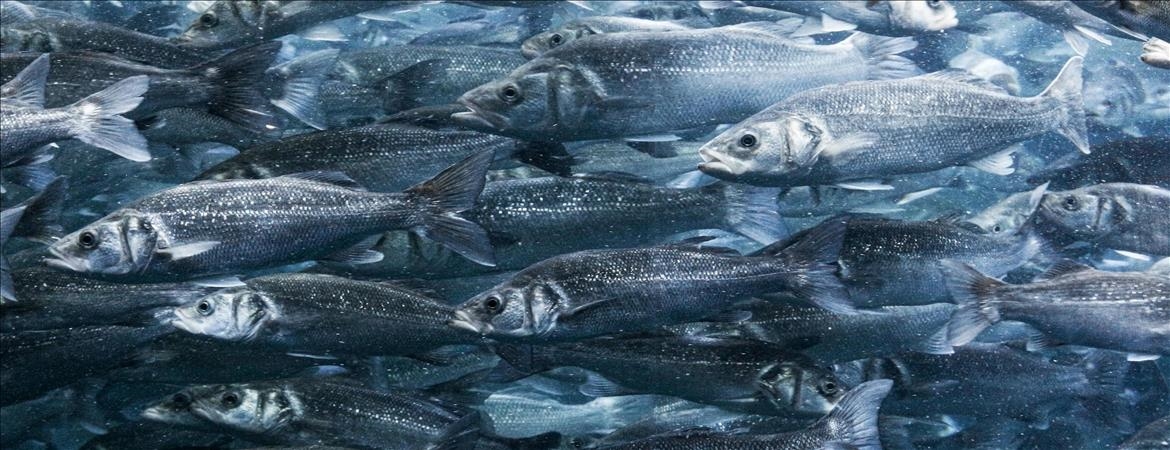
The report emphasizes that fish stocks have already begun to shift. Examples include warmwater species such as sea bass and anchovies being seen in waters around the United Kingdom that were previously too cold for them or their prey, while species such as cod, anglerfish and plaice have shifted to deeper waters and higher latitudes.
Under moderate warming scenarios, the stock biomass of financially valuable cold-water species such as herring, cod and haddock in the North Sea is projected to decline by 10% to 20% by the year 2100.
Ocean warming disrupts fish migration and reproductive patterns while also increasing their energy demands. Fish that cannot find sufficient food to meet these demands either die or shrink in size. One area where this has been observed is the Bering Sea, where record-high temperatures in 2021 led to the death of billions of Alaskan snow crabs, bringing a $200 million-a-year fishery to a near standstill.
Rising salinity levels hit shrimp farming
Another major threat to the fisheries is sea-level rise, which endangers coastal communities and infrastructure worldwide, damaging coastal assets and increases salinity in freshwater systems.
In Vietnam’s Mekong Delta, which is a low-lying area and is therefore highly vulnerable, sea-level rise is expected to cause salinity intrusion to begin earlier in the year, end later than at present, and intrude deeper into the mainstream river.
As salinity levels exceed thresholds optimum for survival for shrimp, 79,000 hectares of aquaculture previously used mainly for brackish-water shrimp farming have been affected. This represents approximately 5% of the total global area used for shrimp aquaculture.
Extreme weather events can carry a heavy cost
Extreme weather events, becoming more frequent and more intense with climate change, are causing damage to natural and built infrastructure, as well as losses to fish farms and fishing equipment, creating another major source of income loss.
Super Typhoon Haiyan, which hit the Philippines in November 2013, caused damage amounting to $12.9 billion, equivalent to 4.7% of the country’s GDP. In affected areas, around 60% of fishing gear suffered moderate to severe damage, while 35% was completely destroyed. Over one-third of farmers and fishers lost their income, and total losses in the agriculture and fishing sectors reached $724 million.
Disease outbreaks cause $6 billion in damage annually
According to the UN Food and Agriculture Organization (FAO), disease outbreaks cost the global aquaculture industry approximately $6 billion per year. Continued warming is expected to drive these costs even higher in the future due to factors such as rising infections and antibiotic resistance.
In Chile, where the aquaculture sector is heavily dependent on the production of salmon species, the infectious salmon anemia (ISA) outbreak between 2007 and 2009 led to the loss of nearly two-thirds of Atlantic salmon production.
Coupled with the impact of the global financial crisis, salmon farming companies and their suppliers owed banks $4 billion as of 2009. The crisis persisted until 2010, resulting in $2 billion in losses and the loss of 20,000 jobs.