Dutch Red Cross warns El Nino threatens food security, water supplies worldwide


Scientists are warning that dropping the worst-case climate scenario does not lessen the threat posed by global warming, French daily Le Monde reported Friday.
According to the report, climate projections remain concerning even though recent scenarios have abandoned the “RCP 8.5” pathway, which long symbolized the worst-case future, with nearly 5C (9F) of warming projected by the year 2100.
The report said the extreme scenario has been set aside by a leading scientific committee whose work is expected to inform future reports by the Intergovernmental Panel on Climate Change.
However, it stressed that portraying the change as evidence that climate scientists were wrong is misleading.
The report cited an April 7 study that outlined seven new greenhouse gas emissions pathways designed to explore possible climate futures. It noted that emissions levels associated with the most extreme scenario are no longer considered realistic, while the most optimistic pathways also appear increasingly unlikely.
The study found that exceeding the 1.5C (2.7F) warming threshold is now considered unavoidable. While the world appears to be moving away from the absolute worst-case scenario, it is also drifting further from the most ambitious goal of the Paris Agreement.
According to the study highlighted by Le Monde, global warming is projected to reach around 3.5C (6.3F) by 2100, about 1C (1.8F) lower than previous estimates.
The study’s lead author, Detlef van Vuuren, a researcher at the Netherlands Environmental Assessment Agency, warned that warming levels comparable to those projected under the former RCP 8.5 scenario could still be reached by 2150.
The report further emphasized that the revision reflects real-world developments rather than an overstatement of climate risks, citing falling renewable energy costs and the adoption of energy transition policies in many countries.
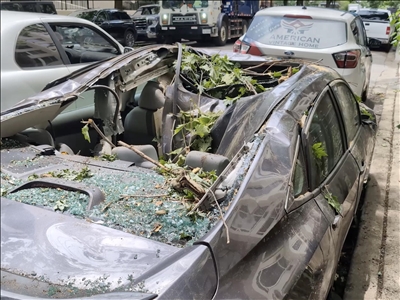
Meanwhile, climatologist Michael Mann warned that even 3.5C of warming by 2100 would have devastating global consequences, pointing to the current impacts of climate change — including heatwaves, droughts, wildfires, and floods — at a time when global temperatures are already approaching the 1.5C threshold.