By Satuk B. Kutlugun
ANKARA
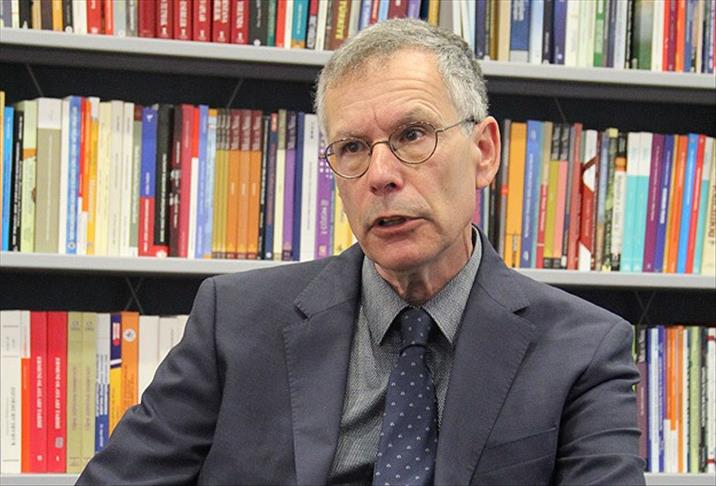
The antagonistic attitude of Iraqi people towards Prime Minister Nouri al-Maliki's government lies at the heart of the Islamic State of Iraq and the Levant's rapid advances in Iraq and Syria, according to University of California professor James L. Gelvin.
Professor Gelvin, an expert on the history of the Middle East, was speaking to Anadolu Agency on Saturday about the recent insurgency in the region led by the Islamic State of the Iraq and the Levant, or ISIL.
"ISIL are extremely disliked in Syria where they have been; I assume they are going to be extremely disliked in Iraq as well," Gelvin said.
He said the reason why the 800 militants-strong ISIL easily managed to do what American soldiers did back in 2003 with 80.000 soldiers was that they met no opposition.
"The army just faded away right in their presence. Very likely it was the army did not want to fight and die for Maliki and his government," he said.
The UCLA professor thinks that the second reason behind ISIL's "unchallenged" threat was that "ISIL is working with Baathist officers who have military backgrounds."
Until a U.S.-led invasion toppled Saddam Hussein in 2003, the Baath Party had maintained a tight grip on the country for more than three decades.
The party was founded in Syria in 1943 espousing an Arab nationalist ideology called Baathism, and then extended its branch to Iraq.
Sectarian undertones of the Iraq conflict
Iraq has seen a marked increase in sectarian violence between Sunni and Shia Muslims in recent months, which the Iraqi government blames on ISIL.
Gelvin said the ISIL in Iraq was capable of creating "a sectarian firestorm" similar to the one that gripped Syria, however, the sectarian undertones should not be overestimated.
"Iran has been working with Hamas and Hamas is supporting the opposition in Syria. Qatar is making moves now towards Iran. Turkey has been talking about negotiating with Iran as well," he said. "So, it is not a Sunni-Shia thing. It’s a geopolitical thing."
Gelvin also said another thing the ISIL managed to do was to create the possibility of the Americans and the Iranians sitting around the same table to discuss the regional problems.
A possible U.S.-Iran cooperation has made headlines since Monday when U.S. Secretary of State John Kerry said that they were open to cooperation with Tehran against the growing tide of Sunni insurgency in Iraq.
ISIL, which already controls parts of Syria, has extended its reach into Iraq since June 10, when it seized Iraq's second-largest city Mosul and soon afterwards took near-complete control of the cities of Tikrit and Tal Afar.
www.aa.com.tr/en