
WASHINGTON
By not providing lethal arms to Ukraine the U.S. is trying to avoid provoking Russia into deploying more sophisticated weaponry into separatist areas, according to the head of U.S. national intelligence.
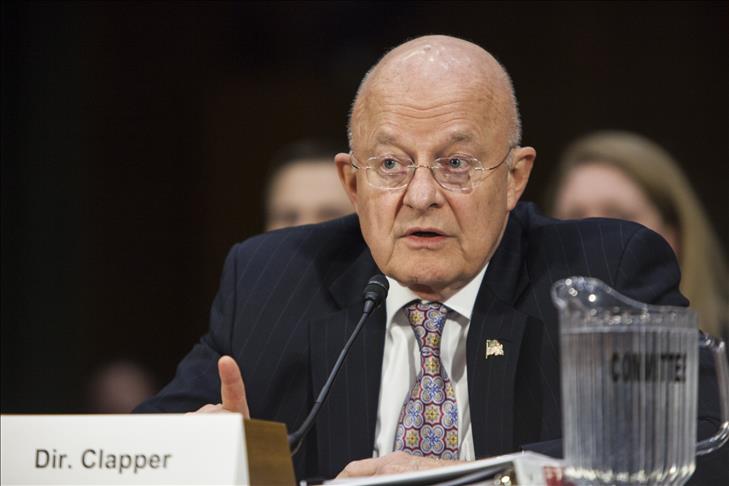
James Clapper testified Thursday before the Senate Armed Services Committee about worldwide threats and U.S. national security.
Responding to a question by committee chairman, Sen. John McCain, Clapper said providing lethal assistance to Ukraine might evoke a negative reaction from Russian President Vladimir Putin and the Russians.
"It could potentially further remove the very thin fig leaf of their position that they have not been involved in Ukraine and could lead to accelerating or promoting more weaponry and higher sophistication into the separatist areas to support the separatists," said Clapper.
A majority of Congress is in favor of arming Ukrainians.
Clapper’s assessment was challenged by McCain who said Putin has already intervened in the eastern parts of the country as well as annexing the Crimean Peninsula in southeast Ukraine.
"I believe he wants a whole, from an infrastructure standpoint, entity, I believe, composed of the two oblasts in eastern Ukraine, which includes perhaps a land bridge to Crimea and perhaps a port, specifically Mariupol," Clapper responded.
He said an attack on Mariupol wouldn't take place before the spring because separatists are still reconstituting and regrouping after the major confrontation in Debaltseve that they recently captured from the Ukrainian army.
Defense Intelligence Agency Director Lt. Gen. Vincent Stewart who also testified, agreed with Clapper saying Russians will take a position against any lethal aid or attempts to bolster the equation in the region.
"We couldn't deliver lethal aid sufficiently and quickly enough to change the military balance of power on the ground," he said.
Pressed by lawmakers, Stewart said Russia and the separatists have significant interior lines in Ukraine where they can resupply a lot faster with a lot heavier weapons than the U.S. could deliver.
2014 was bloodiest for terrorism
Last year saw the highest number of state sponsored mass killing since the early 1990s, and the highest number of refugees since World War II, according to the U.S. national intelligence director.
"When the final counting is done, 2014 will have been the most lethal year for global terrorism in the 45 years such data has been compiled,” James Clapper told Senate at a hearing.
“About half of all attacks, as well as fatalities, in 2014 occurred in just three countries: Iraq, Pakistan and Afghanistan."
Compared to 2013 when more than 11,500 terrorist attacks worldwide killed approximately 22,000 victims, Clapper said preliminary data for the first nine months of 2014 reflected nearly 13,000 attacks and 31,000 fatalities.
Roughly half of the world's currently stable countries are at some risk of instability in the next two years, he added.
Clapper did not provide data about the Syrian conflict for 2014 as several actors fight each other in the country, complicating the counting of fatalities.
Since the fighting began in 2011, approximately 300,000 people have been killed and 52 percent of Syria's pre-war population, or about 11.4 million people, have been displaced, he said.
The regime of Syrian President Bashar maintains a military advantage in the conflict that still threatens regional and global security as it has been a magnet for foreign fighters, according to Clapper.
"Since the conflict began, more than 20,000 Sunni foreign fighters have traveled to Syria from more than 90 countries to fight the Assad regime. Of that number, at least 13,600 have extremist ties," he said, adding that more than 3,400 Western fighters have gone to Syria and Iraq – hundreds of whom have returned home to Europe.
Responding to questions by lawmakers about the Syrian civil war and U.S.-led coalition against Daesh – the Arabic acronym for ISIL – Clapper said a lot of countries are not participating militarily in the coalition out of fear.
"I do think the brutal savagery of ISIL and the beheadings and then the immolation of the Jordanian pilot have had a galvanizing effect on opinion in the Mideast region," he said.
There is more of a willingness for cooperation, he said, particularly around sharing intelligence.
Anadolu Agency website contains only a portion of the news stories offered to subscribers in the AA News Broadcasting System (HAS), and in summarized form. Please contact us for subscription options.