


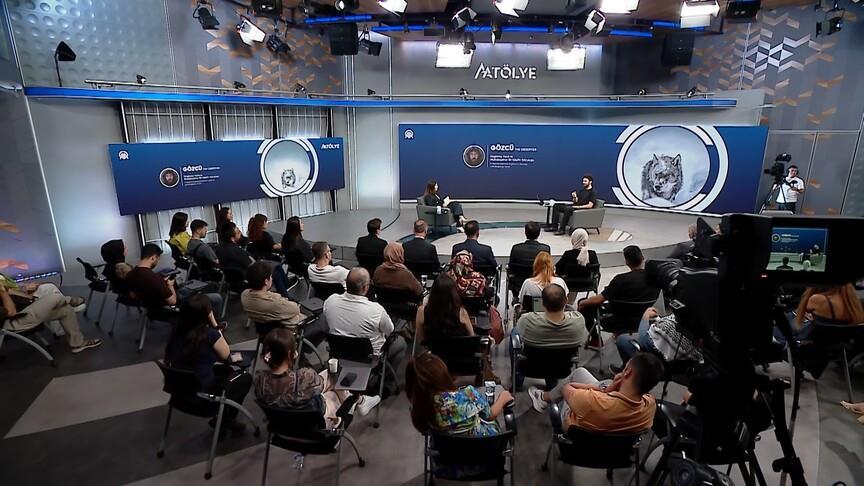
Vural, speaking at an event held at AAtölye, described the role his family played in fostering his interest in and curiosity about animals and nature.
Noting that his father’s way of exploring nature was through hunting, Vural said, “I, too, seemed to be developing a fascination with hunting. When he realized this, one day my father placed a gun and a camera on the table. ‘Both have a trigger, both track, both follow wildlife, and both are part of nature. But there’s one thing that sets them apart. When you pull the trigger on one, you kill; when you pull the trigger on the other, you immortalize. Which one do you choose?’ he said. With that slogan, which steered me toward ‘immortalizing,’ he set this adventure in motion.”
Vural stated that through the content he creates on social media, he aims to share the stories of the animals he tracks with the public. He added that he hopes the content he shares—particularly information about endangered species in Türkiye, such as the Anatolian leopard and the striped hyena—will spark greater interest in nature and animals among young people and children.
Vural, pointing out that there are certain points that require sensitivity in wildlife photography, noted the following:
"You need to obtain the necessary permits and maintain the required distance. You must not throw stones at the animals. You must not feed the animals to observe them. When I first got into this field, I was a child; I knew as much as any child could know about everything. If someone told us, ‘Let’s throw food to observe the animal,’ I would have done so back then. If doing something unethical was necessary to get the shot more easily, I would have done it. But over the past 15 years, I’ve added the title of veterinarian to my credentials. I’ve researched, observed, and examined the reasons behind things, and today I act accordingly—and I try to guide the next generation in that same way.”
“Why shouldn’t my grandchild see it?”
Emphasizing that Türkiye is a very special region with a rich biodiversity, Vural continued:
“Therefore, as much as I enjoy the observations I make abroad as personal experiences, the work I do in Türkiye is always more important to me. I could say I’ve sworn to protect Türkiye’s nature, because I want to pass these things on to future generations. I saw that leopard in Türkiye; I saw the Anatolian leopard. Why shouldn’t my grandchild see it? Why shouldn’t these species exist in Türkiye as they did in the past? Fifty to sixty years ago in Türkiye, a man who shot an Anatolian leopard in was celebrated as a legend. It was reported in newspaper after newspaper. Today, I say: don’t make headlines about those who kill them—make headlines about those who immortalize them.”
