


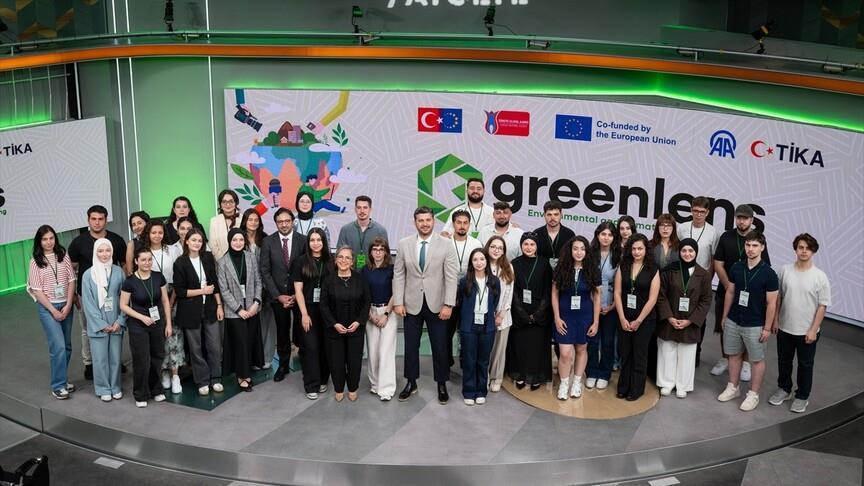
Coordinated by AA, with the support of the European Union (EU) and the Turkish National Agency, and with contributions from Ankara University's National Research Center for Maritime Law, Station de Jeunesse from France, the POLIS Institute from North Macedonia, EDITURA ERUYSAL SRL from Romania, and the Turkish Cooperation and Coordination Agency (TIKA), the opening ceremony and the fourth training session of the project are taking place at AAtölye.
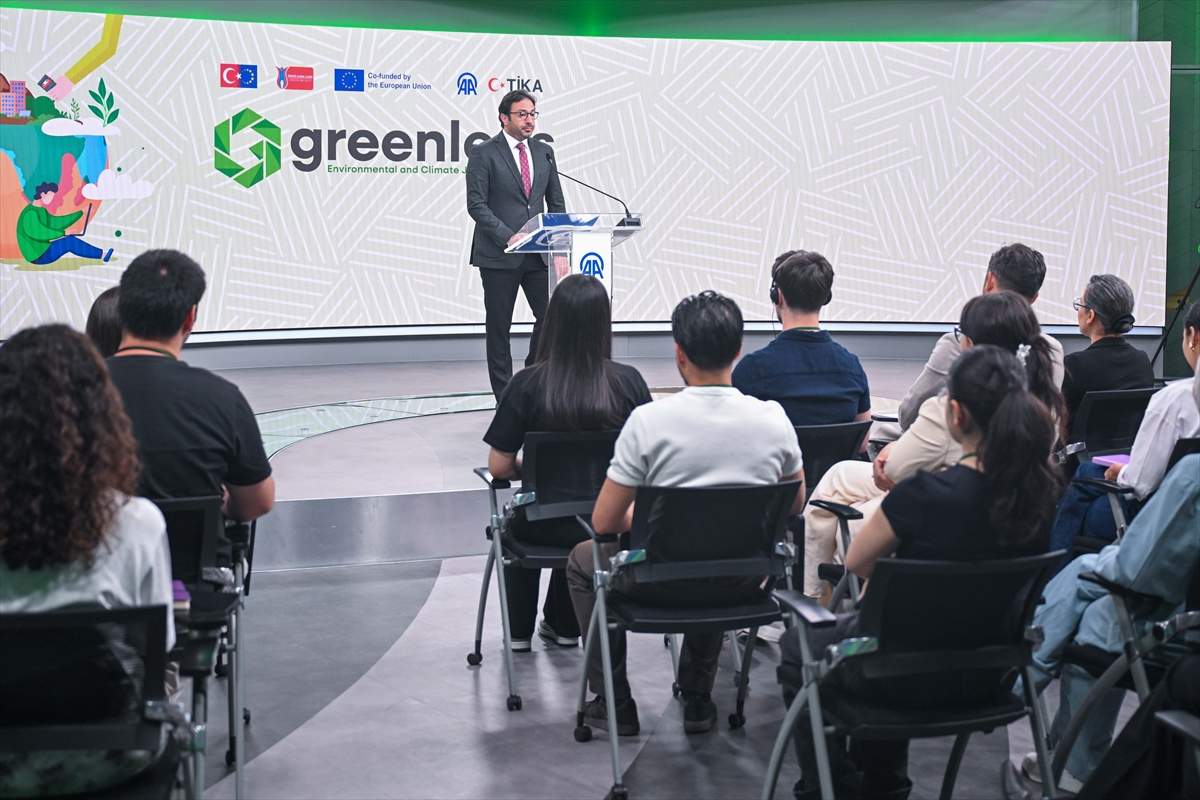
Speaking at the program’s opening, Mehmet Alaca, AA Academy Deputy Manager, emphasized that the climate crisis must be addressed not only as an environmental issue but also as a social, economic, and humanitarian one.
Alaca said that through this training, they aim to help participants develop the skills to access accurate data, practice ethical journalism, and produce effective content on digital platforms.
Emphasizing that Anadolu Ajansı was founded on April 6, 1920, to publicize Türkiye's struggle for independence to the world and has remained a reliable news source ever since, Alaca noted that the AA, which currently operates in 137 countries, publishes in 13 languages, and possesses an extensive global network, holds a leading position in news production.
“As the Anadolu Ajansı Academy, we have organized 482 training programs in the media sector since 2012 and trained approximately 19,000 people. The ‘Green Lens’ training is also one of the most important steps toward this vision,” Alaca said, expressing his gratitude to those who contributed to the program’s implementation.
The training sessions will be compiled into an e-book
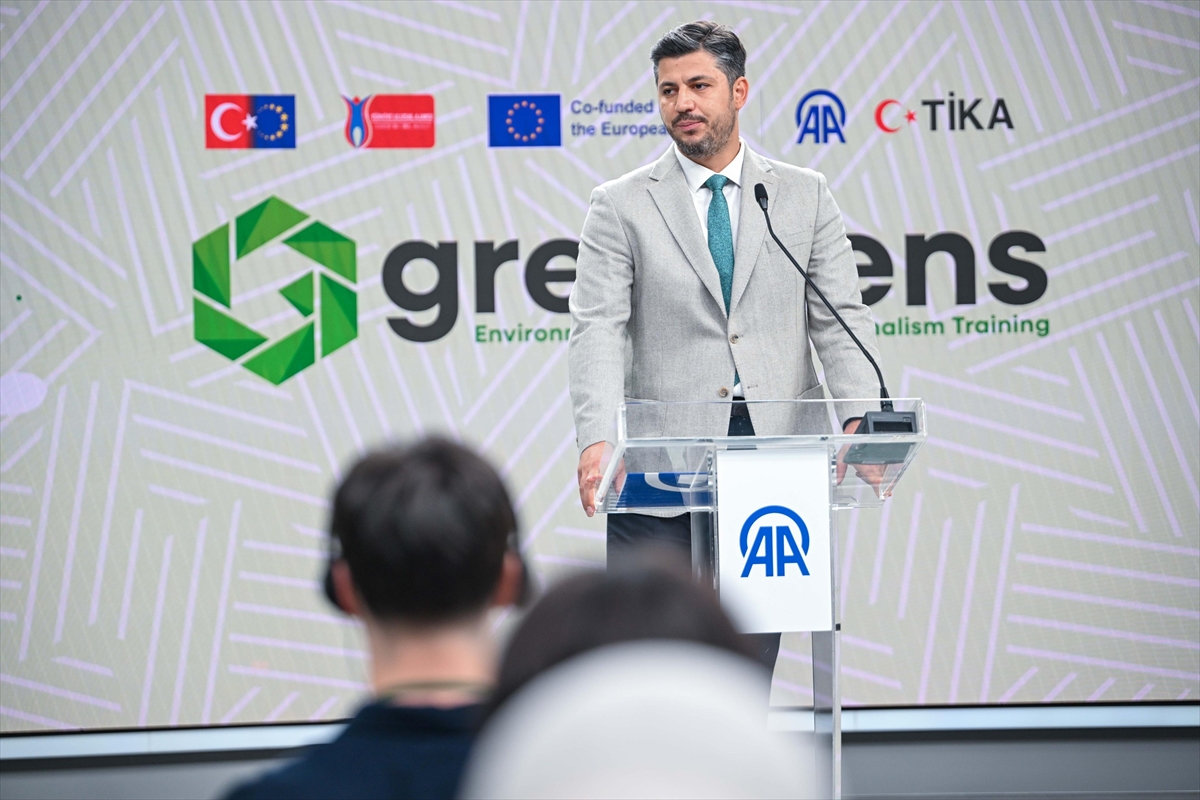
Hakan Güvenlioğlu, AA Project Manager, also provided information about the project.
Güvenlioğlu stated that following the completion of the Green Lens Project, environmental journalism training sessions will continue in a digital format.
Noting that a Learning Management System (LMS) will be launched by the end of the year in collaboration with AA Academy, Güvenlioğlu announced that the platform will be accessible to all users free of charge for two years.
Emphasizing that the Green Lens Project will not be limited to just a two-year training program, Güvenlioğlu explained that the training content will be compiled into an e-book accessible via QR codes, thereby making the theoretical and practical lessons available to a wider audience.
Noting that the final phase of the project will consist of an international environmental forum, Güvenlioğlu added that the forum will showcase the Green Lens Project’s digital learning platform and e-book initiatives, thereby contributing to its international visibility.
