


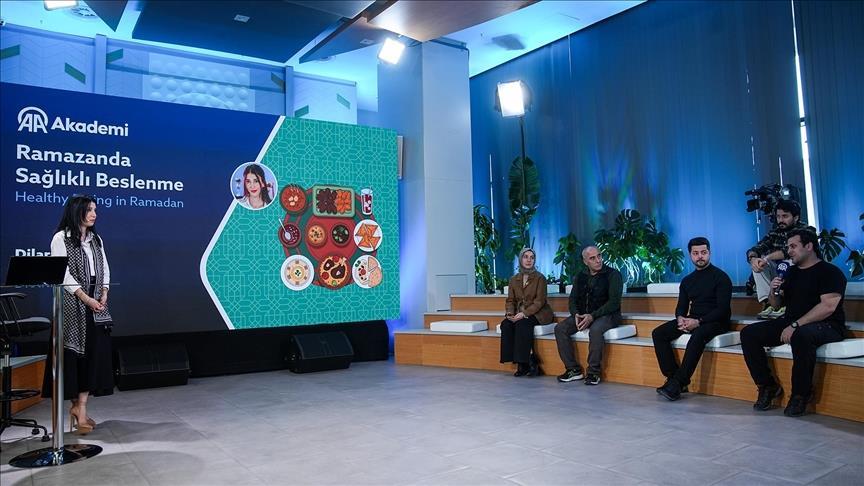
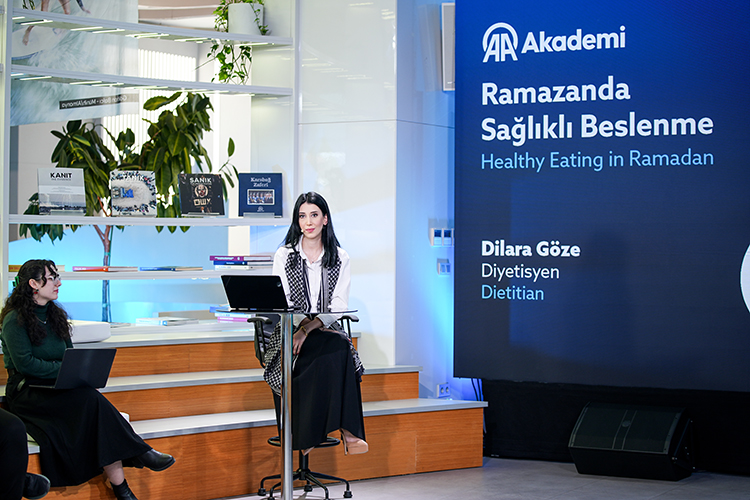
Dietitian Dilara Göze met with employees at the “Healthy Eating in Ramadan Program” held at the AA Istanbul International News Center.
Stating that Ramadan is a process that changes not only eating habits but also the rhythm of life, and that some changes occur in metabolism during fasting, Göze said, “After iftar, blood sugar rises, insulin secretion increases, and fat burning decreases. After suhoor, digestion slows down at night. Energy is stored during the day for fasting.”
Göze mentioned that fasting has positive effects on health and that cells renew themselves during long periods of fasting.
Explaining that fasting supports intestinal health, increases insulin responsiveness, and reduces infection, Göze said that fasting lowers cholesterol levels and has positive effects on brain health.
Emphasizing the need to apply smart nutrition strategies from suhoor to iftar in order to work without losing energy during Ramadan, Göze continued:
"First, you can end your fasting with dates at iftar. This prevents a rapid rise in blood sugar. If you crave salt, you can also end your fasting with olives. You should drink 1-2 glasses of water. Water supports bodily functions and facilitates the intake of nutrients and oxygen to cells. Dates and olives stimulate digestion and balance sugar levels. Soup should be consumed before the main meal. Avoiding fried foods is important for health. Salad should be consumed during iftar. Different types of salads can also be tried. Salad increases fiber and provides a feeling of fullness. Olive oil can be used in salads, and plenty of lemon juice can be squeezed. Pomegranate molasses should be avoided.
Göze explained that dates do not strain the digestive system and raise blood sugar levels gradually, reducing sudden hunger pangs, and that they contain potassium, magnesium, and iron.
“It is important to choose desserts that contain protein.”
Emphasizing the importance of choosing the right time for dessert, Göze said, “Dessert should be consumed as a snack. Güllaç, sütlaç, fruit yogurt, and dark chocolate can be consumed in small portions. It is important to stay away from desserts with syrup. It is important to choose desserts that contain protein.”

Dietitian Göze pointed out that suhoor should not be skipped and should be planned like breakfast, stating, “I do not recommend consuming tea and coffee during suhoor. This increases the need for fluids during the day.”
Göze added that fresh mint and lemon can be squeezed and consumed to combat bad breath that may occur during Ramadan.
The training concluded after answering questions from the employees.
