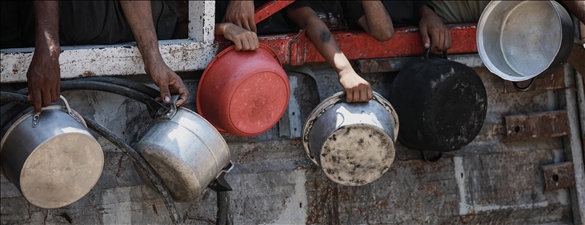
UN food agency says global food prices rise 2.4% in March on higher energy costs



This energy type, which is one of the least costly ways of producing electricity, emerges when hydropower plants convert the power of flowing water into electricity.
The working principle of a hydropower plant is as follows: First, dams made of concrete are built in front of flowing water such as streams, rivers, or creeks, to ensure that the waterreaches a certain elevation. As the water’s height increases, its potential energy also increases. The increased potential energy of the water is converted into kinetic energy as it passes through various equipment installed in the concrete blocks placed in front of it, known as turbines. Although a certain amount of loss occurs due to friction, a significant portion of the existing potential energy is converted into kinetic energy. With the generators connected to the turbine, electrical energy is produced.
The advantages of hydropower plants can be listed as follows:
- They provide employment opportunities for people living around the plant
According to the official website of Turkish Ministry of Energy and Natural Resources, as of the end of June 2022, Türkiye’s installed electricity capacity based on hydraulic energy is 31,558 megawatts, and the share of this energy type within the country’s total installed capacity is 31 percent.
According to April 2023 data from Turkish Electricity Transmission Corporation (TEIAS), the share of hydroelectric power plants in Türkiye’s daily electricity production was recorded as 41.1 percent. In daily production, hydropower plants with a reservoir ranked first with 26.6 percent, run-of-river hydropower plants ranked second with a 14.5 percent share.