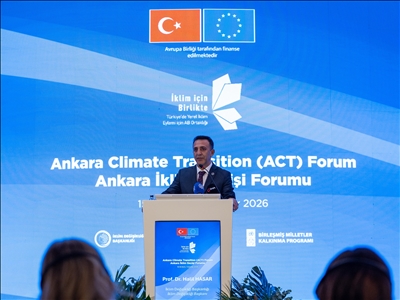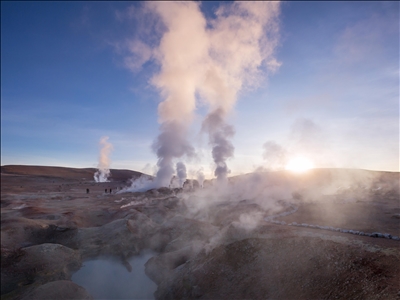
COP31 offers Türkiye chance to showcase geothermal expertise, attract investment: IGA chief



The most well-known among these are hydrofluorocarbons (HFCs), perfluorocarbons (PFCs) and sulfur hexafluoride (SF₆), which are included among the six main greenhouse gases recognized under the UN Kyoto Protocol.
Unlike other greenhouse gases, almost all fluorinated gases are released into the atmosphere as a result of human activities. Each gas group contains multiple subtypes of gases.
Among fluorinated gases, the most impactful are hydrofluorocarbons, whose emissions generally originate from the production of products such as refrigerators and air conditioners. This is because hydrofluorocarbons were adopted as substitutes for chlorofluorocarbons (CFCs), which were banned under the Montreal Protocol, ratified by 198 countries, due to their damaging effect on the ozone layer.
Perfluorocarbons and sulfur hexafluoride, on the other hand, are mostly released through leaks or disposal processes during industrial activities that produce aluminum and semiconductor materials.
Impact on global warming
Although their atmospheric concentrations are lower than those of other greenhouse gases, fluorinated gases remain in the atmosphere for many years and have a much higher global warming potential per unit.
The atmospheric lifetime of hydrofluorocarbons ranges from 1 to 260 years, and their warming impact can be 140 to 11,700 times greater than that of carbon dioxide.
Perfluorocarbons can remain in the atmosphere for 2,500 to 50,000 years, with a warming potential up to 9,200 times greater than that of carbon dioxide.
Sulfur hexafluoride, with an average atmospheric lifetime of 740 years, has a warming potential 23,900 times higher than carbon dioxide.
Since many fluorinated gases have very long atmospheric lifetimes, a noticeable decline in their current concentrations is not possible in the short term.
Efforts to reduce fluorinated greenhouse gases
At the 28th Meeting of the Parties to the Montreal Protocol, the Kigali Amendment was adopted, adding fluorinated greenhouse gases with high global warming potential to the list of chemicals that participating countries promise to phase down.
Türkiye, like many other parties to the Protocol, has a regulation governing the management of fluorinated greenhouse gases and other fluorinated substances in order to control their emissions.
The regulation, which aims to control the use of fluorinated greenhouse gases and was revised in 2022, will introduce quotas for these gases as of 2024. Restrictions are also expected to be imposed on certain gases with “high global warming potential” used in equipment produced in the air conditioning and refrigeration sectors.