UN food agency says global food prices rise 2.4% in March on higher energy costs


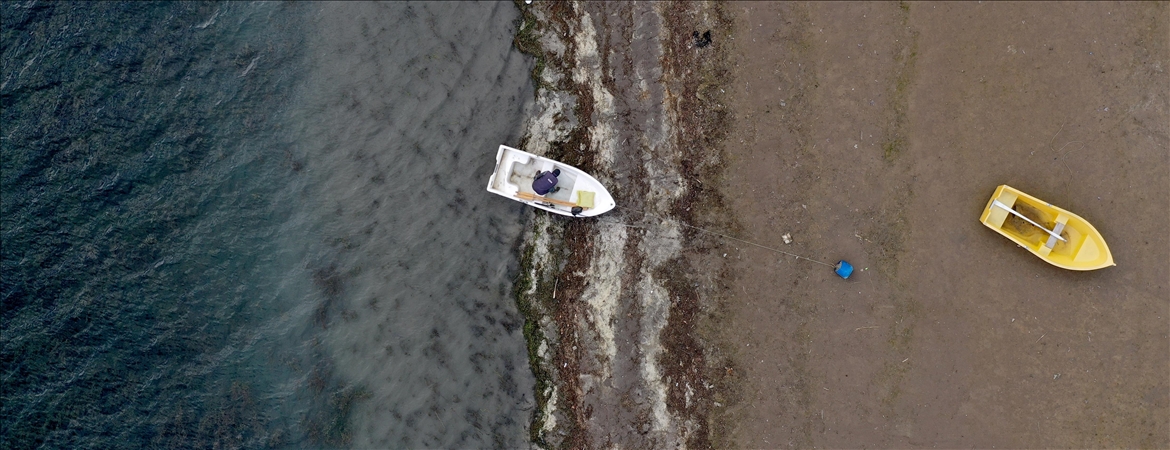
Professor Mikdat Kadioglu, who developed a seven-point “next-generation water management” model together with academics from Istanbul Technical University (ITU), said, “The real risk lies in cities expanding without considering natural resources, infrastructure and living areas.”
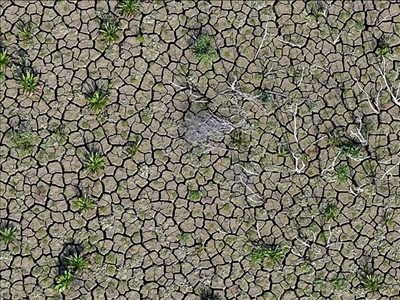
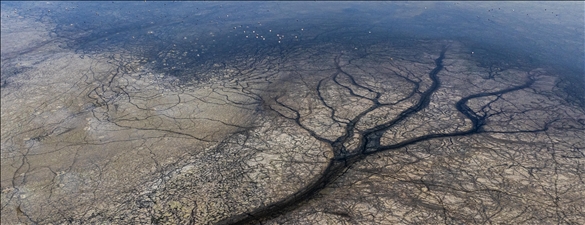
Increasing consumption due to population growth, combined with climate-induced changes in precipitation patterns, is leading to a decline in water resources in Türkiye, as in many parts of the world.
The seven-point “next-generation water management” model prepared by a group of ITU academics proposes permanent and sustainable solutions to the water crisis.
Sharing details of the study with Anadolu, Kadioglu said cities in Türkiye are facing a rapidly deepening water crisis and that traditional approach that includes investments in infrastructure to water management is no longer sustainable.
Kadioglu stressed that the main challenge in the fight against drought and water scarcity is protecting and managing water by considering the entire hydrological cycle. Scientific data, he said, are rapidly pushing Türkiye toward the threshold of becoming a “water-stressedcountry,” noting that annual usable water availability per capita falling below 1,000 cubic meters in the coming years clearly constitutes “water poverty” in international literature.
Describing large, densely populated cities such as Istanbul, Izmir and Ankara as “obese,” Kadioglu said the problem in these cities, where the balance between water supply and demand is deteriorating rapidly, is not limited to drought or temporary water shortages.
“The real risk lies in cities expanding without considering natural resources, infrastructure and living areas,” he said. “Scientific studies show that Istanbul’s sustainable population capacity is far below its current population, that Ankara is at a critical threshold, and that Izmir still has a window of opportunity to manage risks through controlled planning. Reservoir fill levels may provide short-term relief, but unless population growth, zoning and water management are addressed together, urban vulnerability will increase.”
Kadioglu highlighted that changes in precipitation patterns are further aggravating the situation. “Winter precipitation in the Aegean, Mediterranean and Southeastern Anatolia regions is expected to decrease by up to 50 percent by 2070,” he said.
Meteorology units in municipalities
Noting that ITU academics developed a model based on science and engineering in response to the worsening water crisis, Kadioglu said the first point of the seven-point plan is the establishment of meteorology units within municipalities to monitor the entire water cycle.
He explained that these units could collect all relevant data, from groundwater and surface water levels to soil moisture, evaporation rates and drought indices at a single center.
“You can detect drought months in advance before it reaches your doorstep and set up an early warning system. This is standard practice in developed countries, but many municipalities here do not even employ a single meteorology expert,” he said.
Water year budgeting
Kadioglu said the second point of the plan is introducing a water-year budget.
“Water, like money, should have a budget. January 1 may mark the fiscal year, but it is not the water year. The hydrological year begins on October 1. A water-year-based budget calculates existing stored water, expected precipitation inflows, consumption outflows and deficits together. Just as you cannot spend money you don’t have, you must plan according to the water you actually have.”
Drought management plan
Listing the creation of a drought management plan as the third point, Kadioglu said this would allow measures such as park irrigation, industrial restrictions and other precautions to be determined in advance, preventing water tanker queues, economic losses, agricultural collapse and social chaos.
Planning population and zoning according to water availability
Addressing the fourth point, planning population and zoning based on water availability, Kadioglu emphasized that cities’ ideal population and industrial capacities must be determined using scientific data.
Rainwater harvesting
Kadioglu said the fifth point focuses on rainwater harvesting systems that collect rooftop runoff in cisterns. He argued that such systems should be mandatory in all new buildings, andsignificant incentives, such as reductions in property taxes and water bills, could be offered to existing buildings that install cisterns.
Separating drinking water from non-potable use
Under the sixth point, Kadioglu highlighted the importance of drinking water.
“Drinking water is so precious that we cannot afford to flush it down toilets. It should be used only for basic human needs such as drinking and cooking. For toilets, garden irrigation and vehicle washing, grey water made up of treated wastewater and rainwater should be used. For example, Izmir produces 150–200 million cubic meters of wastewater annually. About 70 percent of this could be reclaimed and used for agriculture, industry and irrigation.”
No room for empty rhetoric like ‘rain bombs’
Addressing the final point, Kadioglu said they discussed so-called “rain bombs,” and that this method, frequently mentioned in the public, has no scientific equivalent. He recalled that presenting cloud seeding as a permanent solution is misleading, and that the World Meteorological Organization has clearly shown that this method does not create clouds.
Kadioglu warned that a bleak future awaits if next-generation water management is not implemented:
“When water runs out and we reach ‘day zero,’ there is nothing left to do. Calling water tankers at that point is crisis management, and an admission of failure. In such a scenario, industry comes to a halt, agricultural production collapses and unemployment increasesrapidly. Regions left without water experience first internal, then external migration waves. Water crises bring hygiene problems, epidemics and social tensions. Water is civilization, and civilization is the art of managing water. We must take precautions before becoming water-stressed, not search for remedies after suffering from thirst.”