



DP World is seeking Turkish business partners to support the electrification of heavy-duty road transport and develop charging infrastructure along trade routes connecting Europe, Türkiye, Iraq and the United Arab Emirates (UAE), a company executive said.
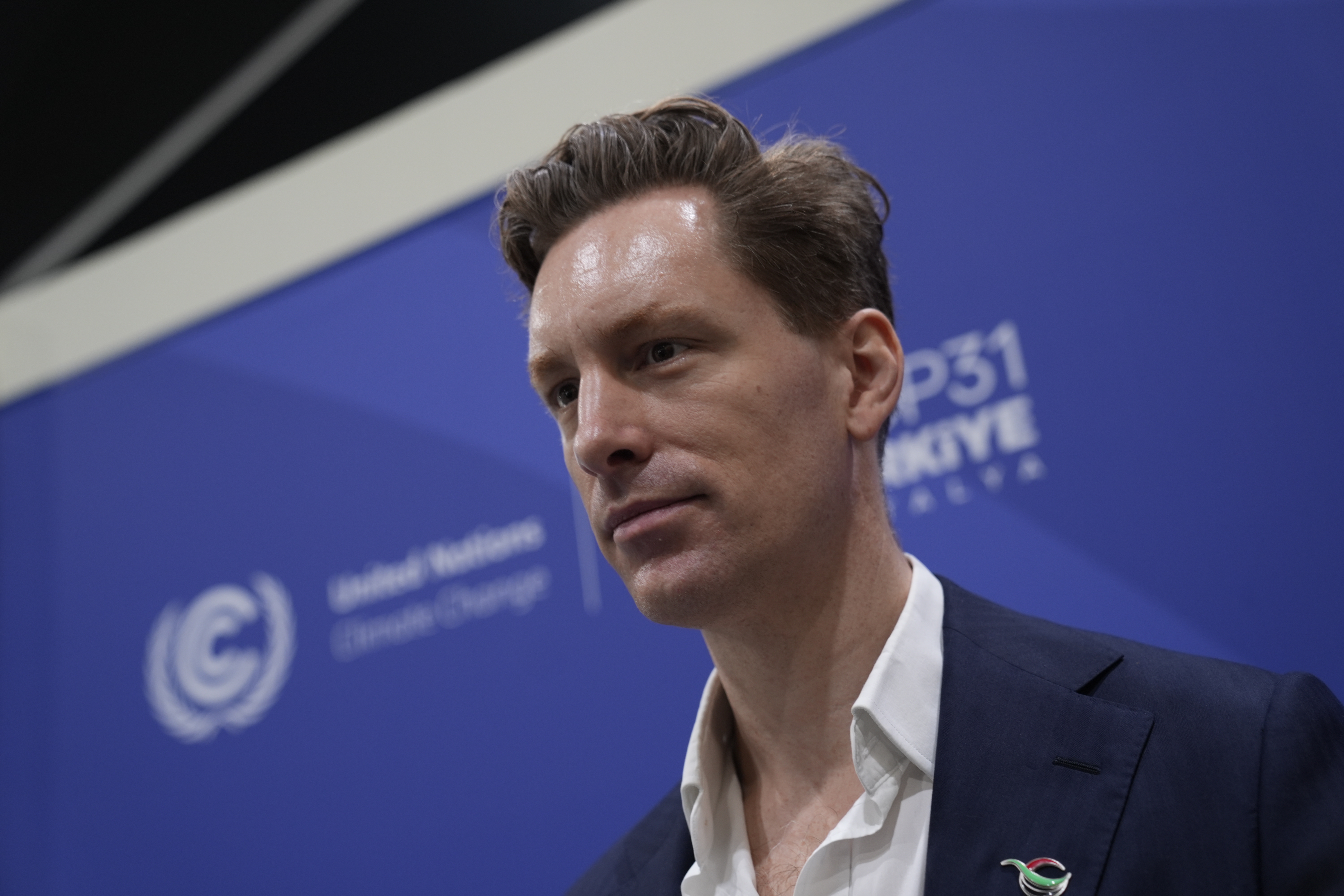
Türkiye's target of achieving 35% electrification by 2035 offers significant opportunities for businesses to participate in the transition to a net-zero economy, the company's Vice President of Sustainability for Europe, Nicholas Mazzei told Anadolu during the 31st Conference of the Parties to the United Nations Framework Convention on Climate Change (COP31) in Antalya.
"DP World is at the heart of the future net-zero economy. It is very important that we are here to demonstrate that we are enthusiastic about the '35 by 35' goal," he said.
Mazzei said DP World, which handles around 10% of global container trade, was focusing on making trade flows more sustainable, with electrification playing a central role in its future growth strategy.
- Electrification of ports and heavy-duty vehicles
Mazzei said the company was electrifying its terminals by replacing conventional equipment with electric alternatives, including shuttle carriers, cranes and terminal tractors.
He described the electrification of heavy-duty road transport as another key priority, noting that the sector accounts for around 10% of global emissions.
"These are very heavy vehicles. They have to travel long distances and need a lot of electricity," he said, adding that some electric trucks require up to 1.5 megawatts of power when charging.
Mazzei said expanding renewable energy capacity and electricity infrastructure at ports and warehouses would be essential to supporting the transition.
He also pointed to battery weight as a technical challenge, noting that electric trucks weighing 40 to 44 tons require businesses to reconsider cargo loads and trailer configurations.
However, he said electric trucks offered significant long-term advantages in terms of operating costs, reliability and durability.
"These vehicles are quiet, safer, more resilient, more reliable, and they are cheaper if you know how to use them," he said.
Mazzei said electric trucks could last between 1.2 million and 1.8 million kilometers, three to four times the lifespan of diesel trucks.
- Financing remains a challenge for smaller businesses
Mazzei said the higher upfront purchase price remained a major barrier, particularly for small and medium-sized enterprises, as electric trucks could cost approximately twice as much as comparable new diesel vehicles.
He emphasized the importance of financing mechanisms to help smaller businesses and developing economies benefit from net-zero technologies.
"If you have good electricity and cheap electricity, your electric truck will be cheaper because they run far more efficiently," he said, adding that lower maintenance costs and greater reliability could improve their long-term economic viability.
He also noted that electric trucks offered drivers a more comfortable working environment, with less vibration and exposure to pollution than diesel vehicles.
- Türkiye offers opportunities for business partnerships
Mazzei said Türkiye's electric vehicle manufacturing capabilities offered opportunities to supply the European Union market and participate in the wider transition to sustainable logistics.
He said DP World was looking for Turkish companies to cooperate in logistics, electricity supply, charging infrastructure, vehicle maintenance, tire manufacturing and trailer production.
"We're looking for partners. I'm looking for companies that would say, 'DP World, we want to have you a space to charge. Here's our truck. Maybe we can do the maintenance on them,'" he said.
Mazzei said trade routes extending from Europe through Türkiye and Iraq towards the UAE could create new business opportunities for Turkish companies.
"There are a lot of good opportunities for companies to join this net-zero transition because this is still a new market," he said, adding that innovative companies could become part of global supply chains through partnerships with international businesses.
- Marine ecosystem restoration
Mazzei also highlighted DP World's investments in marine ecosystem restoration, including projects in the Sea of Marmara and the Black Sea.
He said the company supported initiatives to collect discarded fishing nets, known as ghost nets, and turn them into sunglasses, as well as coral restoration and algae plantation projects.
He stressed that healthy marine ecosystems were important for fishing communities, small businesses and other communities living around ports.
By Fuat Kabakci
Anadolu Agency
energy@aa.com.tr
