Lebanon says farmland area roughly size of Chicago destroyed in Israeli offensive


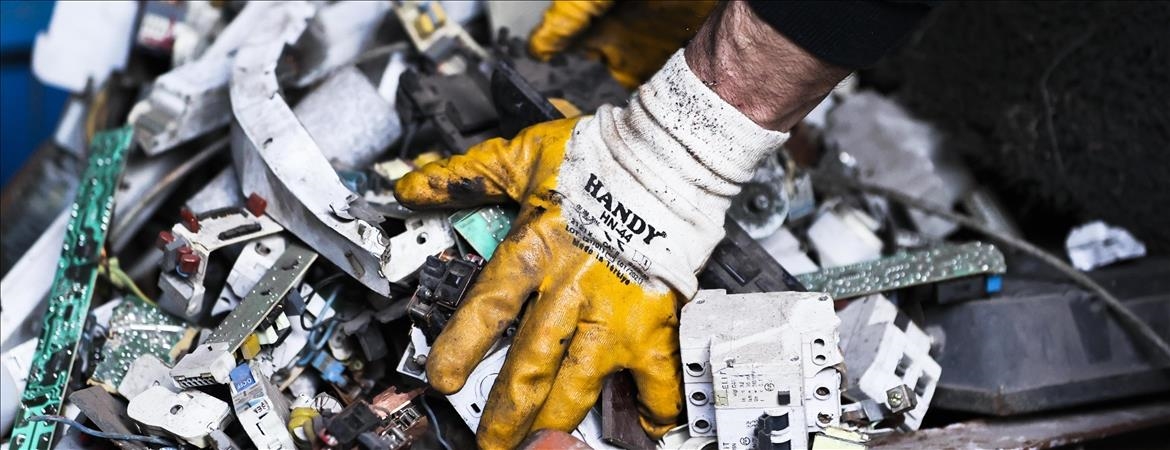
Recycling is extremely important both for making the best use of the world’s limited resources and for saving energy and money. However, its main purpose is to prevent end-of-life products from accumulating in landfills, spreading to different ecosystems such as soil and oceans, causing pollution, and damaging biodiversity.
In short, recycling is one of the simplest yet most environmentally friendly steps that can be taken.
Recycling often appears in two forms: upcycling and downcycling.
When an unused or old material is transformed into a new product through a creative design, making it more durable, higher-quality, or more useful, it is considered practicing upcycling.
Those who have ever thought of making a bookshelf by assembling and painting wooden fruit crates, or turning the pieces of a broken mug into a pen holder, are already familiar with the idea of upcycling.
However, when an end-of-life material is converted into a product of lesser value, this is called downcycling. Materials such as paper and plastic, which degrade in quality when recycled, are the most common examples of downcycling. Transforming books into wrapping paper, for instance, is a fitting example.
In upcycling, you create a product that can be used for a long time, thereby extending the lifespan of the raw material. For this reason, it is preferred over downcycling, which produces a lower-quality and shorter-lived material.