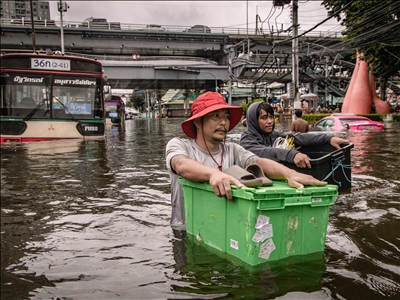
Thailand floods kill 19, affect 700,000 in Bangkok as rains ease


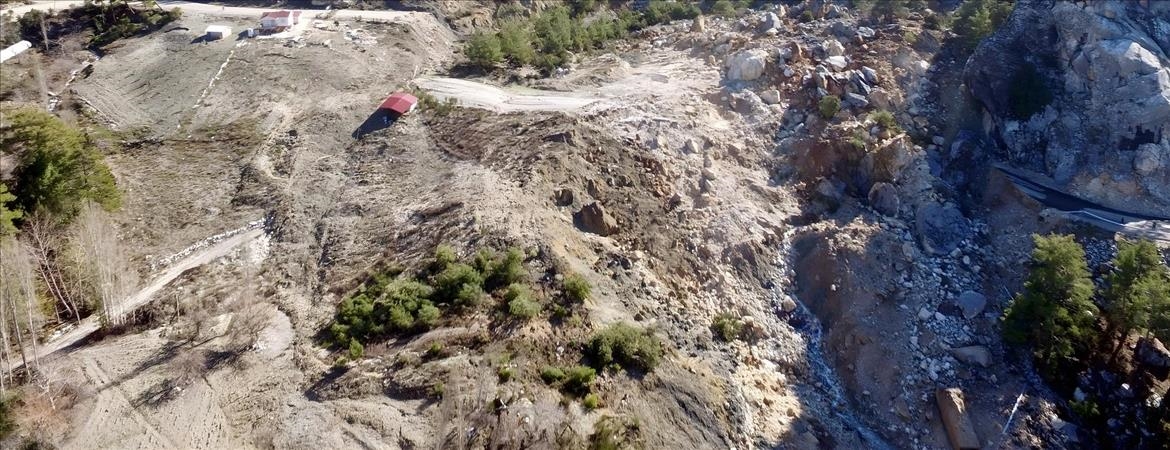
Landslide-related deaths are largely caused by human activity and land-use change, according to recent research conducted by a university in Türkiye.
The study conducted by the Istanbul Technic University analyzed landslides in 46 countries, together with nearly 60 years of land-use change data and 45 years of population data.
According to the study, deaths caused by landslides are shaped more by land use and levels of economic development than by natural factors such as topography and rainfall.

Deforestation, expansion of agricultural areas, and unplanned urbanization are among the main factors that disturb the natural balance of slopes and increase fatalities.
In low-income countries, nearly 50% of mountainous areas have been opened to human influence, while in high-income countries, this figure remains around 7%.
A strong relationship was identified between intensive land-use change and high fatality rates in countries such as Haiti, Sri Lanka, and El Salvador.

By contrast, countries with similar topography, such as Switzerland, Japan, Austria, and South Korea, have kept casualties low through effective land planning.
Seckin Fidan, one of the study's contributors, told Anadolu that the research began with the need to create a database on fatal landslides in Türkiye and then expanded to investigate fatal landslides on a global scale.

Fidan said that they identified a significant gap in open-access global data because existing datasets did not consider topography, climate, and human pressure together.
This gap shaped the study's direction, prompting the researchers to create a model that evaluated fatal landslides using all three factors.
He said the results revealed a strong relationship between land-cover change and fatal landslides.
One of the study’s most important findings was the decisive role of human impact: as the rate of land-use change increases, both the number of landslides and the number of deaths rise, he added.
Fatal landslides cannot be explained solely by rainfall, slope, or geological conditions; human involvement must also be considered.

Professor Tolga Gorum, another research contributor, noted that Türkiye is one of the European countries with the highest number of landslide-related deaths.

Despite Türkiye's relative success in post-disaster response, risk reduction remains insufficient.
Since the 1980s, increasing land-use changes have affected landslide risk in Türkiye, where mountainous and rugged terrain accounts for approximately 58% of the country's surface area.
Gorum concluded that planned land management supported by nature-based solutions is critical.
He recommended strengthening risk-reduction policies, preparing landslide risk maps at national and local levels, improving land-use planning, and expanding early warning systems.