Mauritian president, new Turkish ambassador explore avenues to expand cooperation


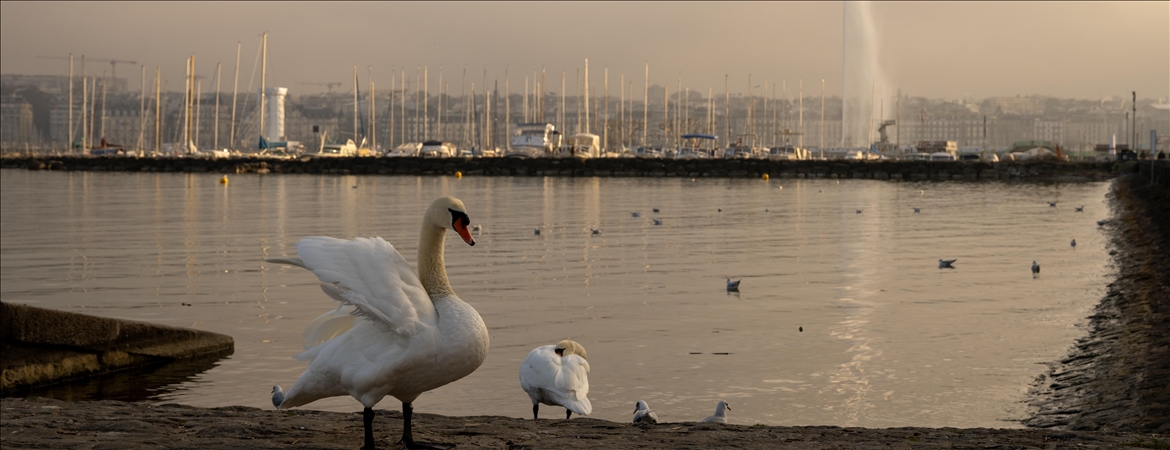
Rivers and streams across Switzerland have fallen to exceptionally low levels as an drought grips the country, according to media reports on Thursday.
The ongoing drought has caused water levels across Switzerland to fall to record lows, with the Federal Office for the Environment (FOEN) registering historic lows at 11 monitoring stations, news outlet Swiss Info reported, citing the Keystone-SDA news agency.
The FOEN said that between April 1 and July 31, around a fifth of monitoring stations saw their lowest water levels on record for this time of year.
Water levels in many watercourses north of the Alps are so low that such levels occur only once every two to 10 years, and in some cases only once every 30 to 100 years or even less frequently, according to the FOEN.
Along with rivers and streams, lakes are also being affected by the heat wave and drought, with water levels exceptionally low, in Lake Constance, Lake Walen, Lake Zurich, Lake Zug and Lake Maggiore.
Switzerland still has "abundant water resources," the FOEN said, but warned that climate change will alter their availability.
Dozens of Swiss glaciers could disappear amid 2nd-most severe melt, report says
The same heat and drought are taking a toll higher up, as dozens of Swiss glaciers could disappear this year with the country facing what is likely to be its second-most severe glacier melt on record, broadcaster Swissinfo reported Thursday.
"We are on course for the second-most severe glacier melt we have ever recorded," glaciologist Matthias Huss told the Keystone-SDA news agency, according to the report.
Huss said many small glaciers could disappear this year, estimating that the remaining ice on around 20 to 30 glaciers could vanish completely.
Low snow cover on glaciers coming out of winter, coupled with intense heat arriving early in the summer, were cited as two key factors driving the severe melting.