Italy issues weather alerts in 12 regions as severe storms hit


The largest coral forest ever recorded in the Aegean Sea has been discovered in Türkiye's territorial waters, between the island of Gokceada and the Greek island of Samothrace, during a research expedition conducted by the Turkish Marine Research Foundation (TUDAF).
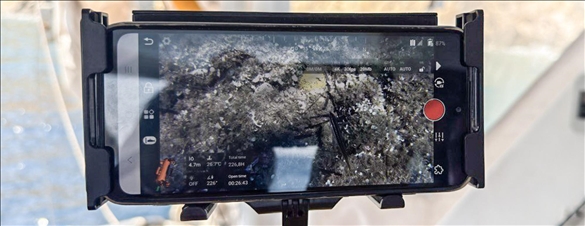
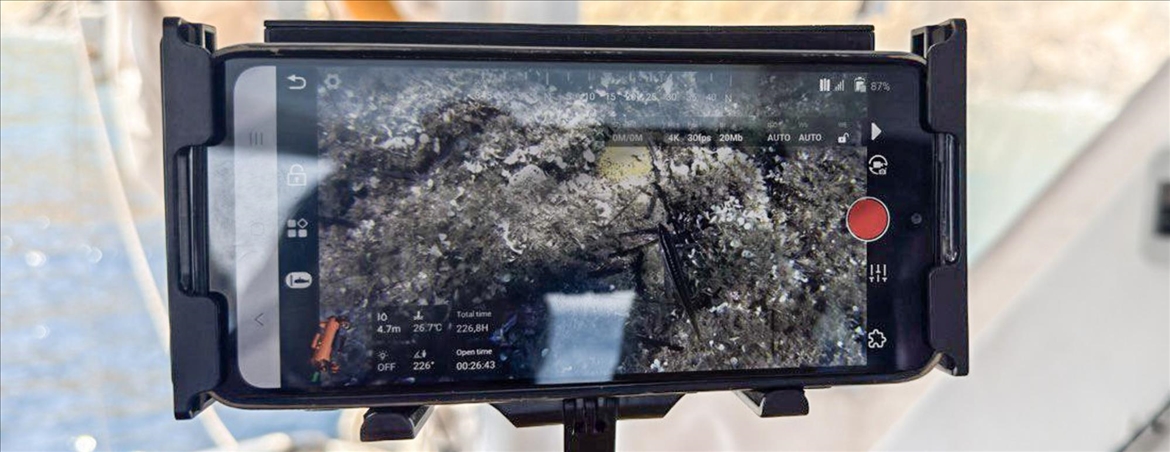
The research, supported by Turkiye Is Bankasi, was carried out aboard the research vessel R/V TUDAV-Maru using remotely operated vehicles (ROVs) and underwater imaging systems.
Speaking to Anadolu, TUDAF President Bayram Ozturk said the team discovered a large coral forest in the area between Gokceada and Samothrace that had not previously been known to exist.
Ozturk said the coral communities begin at a depth of around 70 meters and extend to 120 meters, adding that the area hosts rich biodiversity and significant calcium carbonate deposits.
"To our knowledge, no coral forest of this size had previously been discovered in the Aegean Sea — either on the Turkish or Greek side," he said.

Ozturk noted that the coral forest begins approximately two nautical miles offshore and extends for more than two kilometers, adding that initial findings suggest it may continue into deeper areas and international waters.
He said underwater fault lines, water and gas seeps have also been observed in the area, and that further research will be conducted to establish their relationship with the coral communities and calcium carbonate deposits.
"The area we have discovered is currently within Türkiye's territorial waters, but we have not yet been able to fully determine the boundaries of the coral forest. It may extend to depths of 200 to 300 meters. Our research vessel is still working in the area," he said.
Discovery consists of soft coral species
Ozturk explained that the corals discovered are a soft coral species known as gorgonians, rather than hard corals, and that among them are species rarely seen in the Mediterranean and are more commonly found in the Western Mediterranean.

"Previous coral research in Türkiye was generally conducted at depths of 30 to 40 meters, at most 50 meters," Ozturk said.
"A coral forest of this size, extending for kilometers, was not previously known to exist in Türkiye's seas. This is a first not only for Türkiye but for the Aegean Sea as a whole."
He described the coral forest as home to a rich ecosystem comprising not only soft corals but also fish and various invertebrates, calling the discovery encouraging for the conservation of biodiversity in the Aegean.
"This area needs to be placed under protection, but to do that, its boundaries, depth and full extent must first be established. This discovery is an indication of how rich the Aegean Sea is in terms of biodiversity. Whether new species have been found will become clear after detailed examination. We believe a large body of scientific data will emerge from the research," he said.

Research to expand in fall
Ozturk said the six-member scientific team from TUDAF will continue its research in September and October, focusing on the deeper sections of the coral forest.
He added the discovery was the result of nearly a decade of research on coral forests.
"This discovery did not emerge overnight. We have trained postgraduate students and carried out numerous scientific studies in this field. Investment in technology and years of experience made this discovery possible," Ozturk stressed.
He added that the coral communities discovered are in healthy condition, with no lesions, tissue loss or signs of mortality that might indicate the effects of climate change.
Türkiye's deepest coral records
Assoc. Prof. Onur Gonulal, a marine biologist at Istanbul University's Faculty of Aquatic Sciences, said the team examined coralligenous and coral communities in the mesophotic - or semi-dark - zone.
As manned diving is not possible at such depths, the team used remotely operated underwater imaging systems.

"We descended to approximately 88 meters with our underwater vehicle, and in subsequent dives reached 98 meters. We obtained detailed imagery of coral and coralligenous communities at these depths — images that may rank among the deepest coral records in Türkiye. We had the opportunity to examine and document coral forests we were already aware of using the underwater vehicle," he said.
Gonulal noted that the imagery and data collected will contribute to determining the structure, biodiversity and distribution of coral communities in the area.