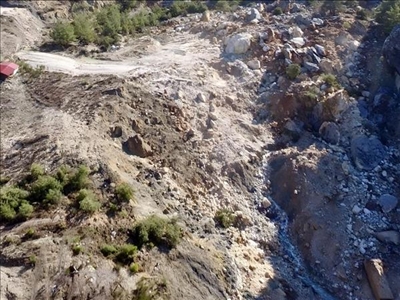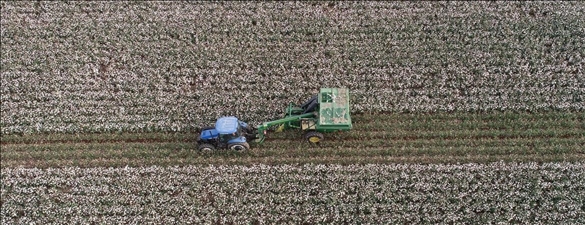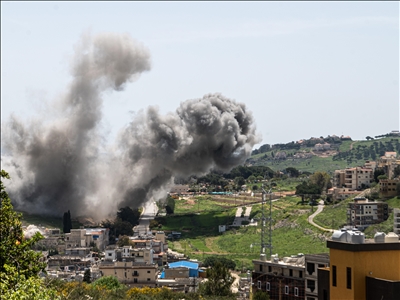
Lebanon says farmland area roughly size of Chicago destroyed in Israeli offensive


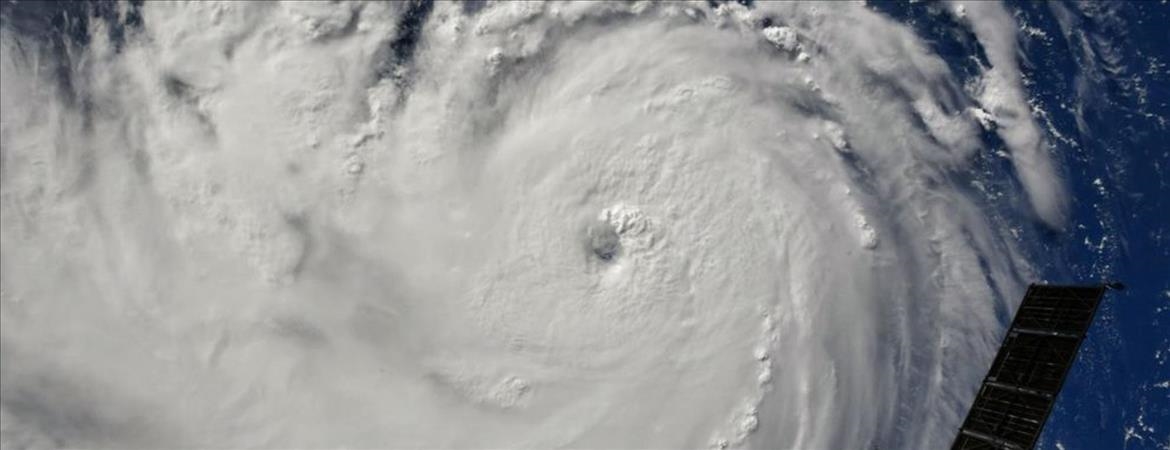
Tropical cyclone is a descriptive term for deep low-pressure systems that develop in tropical regions and are non-frontal in nature. Surface winds with a maximum speed of up to 62.7 kilometers per hour are called tropical depressions, while those exceeding 119 kilometers per hour are classified as hurricanes.
Hurricanes form in tropical regions near the equator, in the oceans. The winds they generate rotate around a center known as the “eye”. This rotation occurs counterclockwise in the Northern Hemisphere (cyclonic) and clockwise in the Southern Hemisphere (anticyclonic). Hurricanes develop in tropical regions where waters are warm, the air is humid, and converging trade winds are present. Most Atlantic hurricanes begin as thunderstorms off the west coast of Africa and move toward the warm tropical ocean waters.
For a hurricane to form, several conditions must be met: Warm, moist ocean air must maintain a continuous evaporation–condensation cycle, there must be a strong surface wind pattern converging at the center, wind speeds at higher altitudes must remain steady, and a pressure difference must exist between the surface and higher altitudes.
As warm, moist air rises rapidly from the ocean surface, the water vapor condenses, forming storm clouds and raindrops. This condensation releases latent heat, which warms the air aloft, causing it to rise even further. The rising air is replaced by warm, moist ocean air from below. This cycle draws more moist air from the ocean below into the developing storm area and continuously moves warm air from the surface into the atmosphere. The heat exchange from the surface generates a rotating pattern centered at its core.