Groundwater levels falling across 92% of monitored sites in France


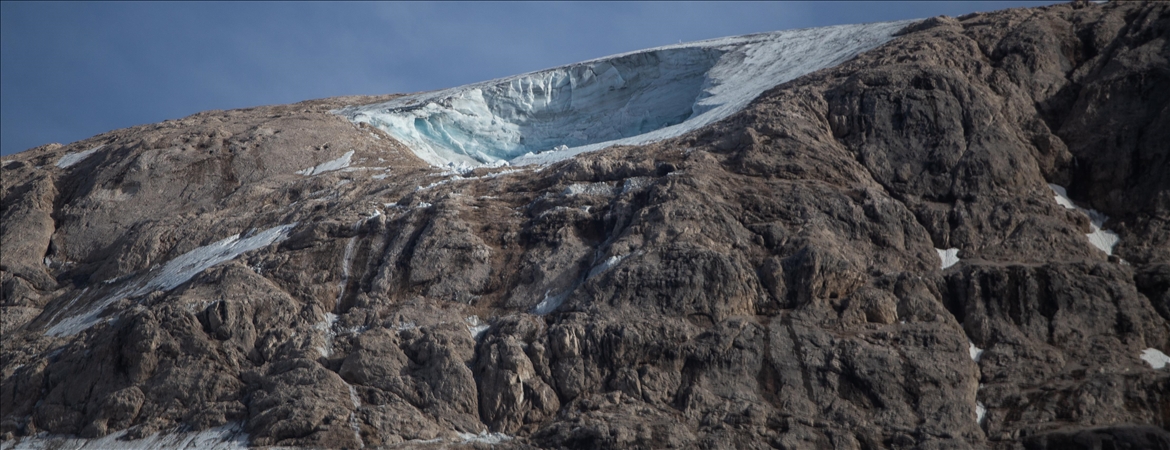
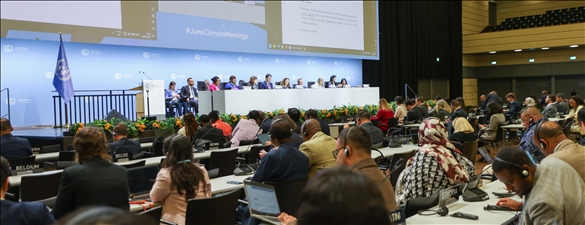
The theme of this year’s International Mountain Day on Dec. 11, adopted by the United Nations (UN) General Assembly, was set as “Glaciers matter for water, food and livelihoods in mountains and beyond,” to draw attention to melting mountain glaciers.
The General Assembly had declared 2025 the International Year of Glaciers’ Preservation to highlight the critical role of glaciers in the climate system and the water cycle.
Speaking to Anadolu, Istanbul Technical University Professor Orhan Ince, the scientific director of the TerrArctic Mega Grant Project, said rapid transformations are occurring in high-mountain ecosystems due to rising global temperatures, changes in precipitation patterns and the increasing frequency of extreme weather events.

“Glacier losses are at an alarming level”
Stressing that glaciers are not merely visual landscape elements but sources of drinking water for millions, reserves for agricultural irrigation, a foundation for hydropower production and providers of ecological balance, Ince said mountain glaciers worldwide are raising alarms.
Describing mountain glaciers as “the most sensitive sensors of the climate system,” Ince said:
“The loss of mountain glaciers is the most visible evidence of change in the climate system at an irreversible threshold. We see that glaciers are shrinking rapidly in the Himalayas, Alps, Caucasus, Andes, and all other mountain systems of the Alpine-Himalayan belt. The latest IPCC (Intergovernmental Panel on Climate Change) Assessment Report shows that mountain glaciers lost an average of 267 gigatons of ice mass annually between 2000 and 2020. The World Glacier Monitoring Service (WGMS) 2024 report confirmed that 2023 was the ‘the fastest recorded year of glacier loss in history’. Glaciers in the Alps have lost 65% of their mass compared to 1970, more than 30% in the Alaska–Yukon system, and over 40% in some regions of the Himalayas. These data show that glaciers are no longer just shrinking but are on the verge of extinction in some mountain systems.”
Pointing out that rapid melting in glaciers could increase geological risks such as landslides, sudden floods, and lake overflows, Ince warned that ecosystems could be directly affected and the balance of global atmospheric circulation systems could be disrupted.
“Dramatic shrinkage experienced over the past 40 years”
Ince stated that the loss of glaciers signals weakening of the entire climate system.
“Especially the glaciers on Mount Ararat, the Cilo-Sat Mountains, the Kackar Glaciers, and Erciyes have experienced dramatic shrinkage over the past 40 years. Field studies and satellite analyses show ice mass losses of 40–60% in some areas. This does not only mean a decrease in ice mass; it directly affects many factors from the groundwater cycle to stream flows, and from mountain slope stability to landslide risk. Glaciers on Mount Ararat have shrunk by more than half since the 1980s. In the Kackar range, glaciers are retreating 10–20 meters per year on average. This will directly affect water regimes, agricultural irrigation and hydropower production in the Eastern Black Sea region, and make ecosystems more fragile in the future,” he said, regarding glacier losses in Türkiye.
Ince added that Arctic warming is occurring three to four times faster than the global average, and atmospheric wave patterns originating there are altering precipitation and temperature patterns across mountain belts from the South Caucasus to the Himalayas. Measurements conducted under the TerrArctic Project in Siberian taiga regions, tundra transition zones and permafrost areas help understand the future of mountain glaciers.
Referring to IPCC scenarios, Ince said future warming will further affect mountain glaciers: “With 1.5°C of warming, 50% of mountain glaciers will disappear; at 2°C, 60–70%; and with 3°C of warming, almost all of them will be gone by the end of the century. This would put the water supply of 1.9 billion people in the Himalayas at risk, cause 12–22% water stress in agricultural areas in South America, lead to an 8–12% drop in global hydropower production by 2050, and result in a 20–25% seasonal flow reduction in drinking and irrigation water in Türkiye by 2050. These losses are irreversible, but they can be slowed.”
Ince explained that melting glaciers could increase seasonal fluctuations in irrigation water and pressure on agricultural lands, adding that in the Himalayan system this situation creates a risk of 15% agricultural land shrinkage and could trigger an 8-20% increase in food prices.
He warned that it is projected that at least 30 million people could be forced to leave their homes between 2030 and 2050 due to glacier-related water loss.
Three critical topics
Ince outlined key measures to address glacier loss:
“Three main topics are critical: First, annual glacier changes must be monitored using high-resolution systems such as Lidar, GNSS, Sentinel satellites and high-altitude drones. Second, national hydrological early warning models are needed to track risks such as flash floods, flow changes and glacial lake outbursts. Third, carbon emissions must be reduced. Long-term glacier preservation is only possible by global cuts in carbon dioxide and black carbon emissions. Otherwise, the losses we discuss today will become part of daily life after 2050.”