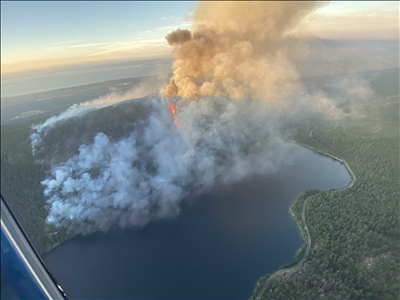
More than 20,000 forced to evacuate amid Canada wildfires


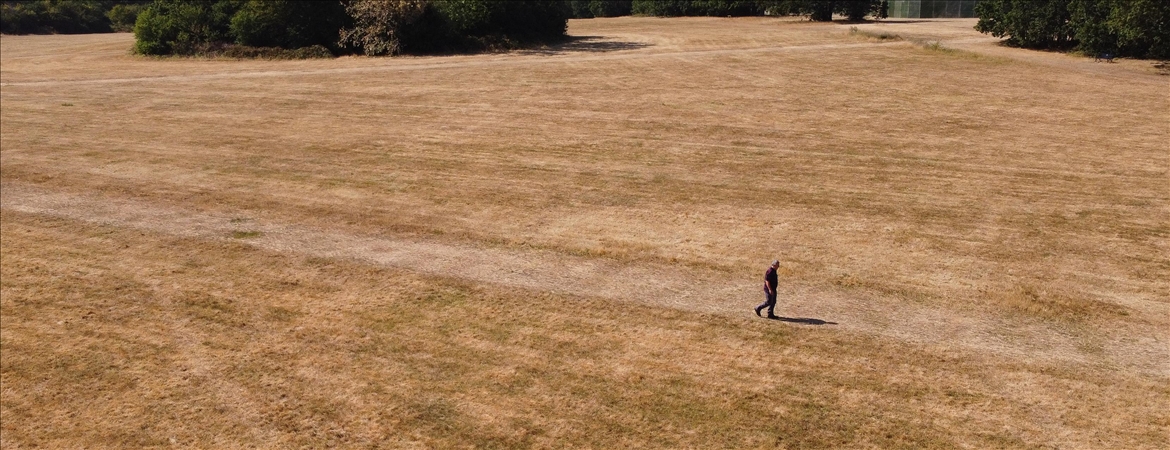
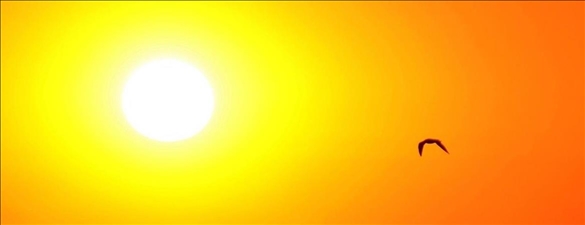
The UK is on course to record its hottest summer on record for average temperature, with only average conditions needed for the remainder of August to surpass the current record set last year, the country's Met Office said on Tuesday.
A new record is even more likely for England and Wales, with records dating back to 1884.
“Another record-breaking summer now looks increasingly likely for the UK, following the second-warmest June and second-warmest July on record and yet another heatwave imminent,” Met Office senior scientist Mike Kendon said in a statement.
“We’ve seen temperatures hit 38C (100.4F) in June, 35C (95F) in early and late July, and this threshold is looking to be reached again in the next few days,” he added. “These statistics are a clear reminder—if one were needed—of the stark changes that we are seeing in the UK’s climate.”
The UK’s record warmest summer for average maximum temperatures, set in 1976, is also under threat. The Met Office said the remainder of August needs to be only 0.72C above the 1991-2020 summer average for the record to be surpassed.
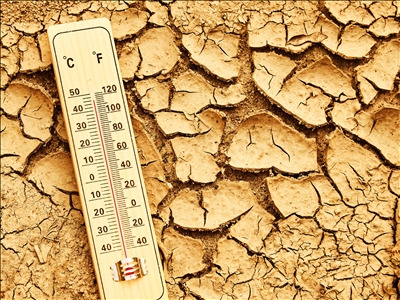
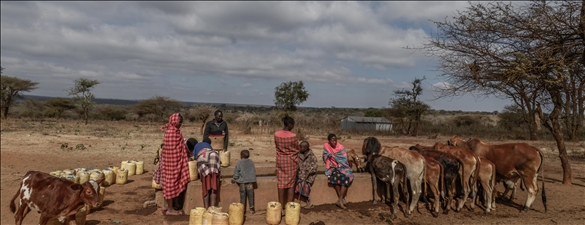
Meanwhile, more than two-thirds of England is now officially in drought after the country recorded its driest July since records began in 1836.
The East Midlands, Lincolnshire and Northamptonshire, Kent and East Sussex, and Solent and the South Downs were moved into drought status on Monday.
Last month, the UK Health Security Agency (UKHSA) said Britain recorded 2,877 excess deaths during the May and June heat waves, nearly double the 1,504 excess deaths recorded during the summer of 2025.
Irish farmers warn of fodder pressure after prolonged dry spell
Meanwhile, as the UK suffers from record heat and spreading drought, Irish farmers are feeling the strain, with the Irish Farmers' Association (IFA) calling for the National Fodder and Food Security Committee (NFFSC) to meet urgently to assess animal feed supplies following prolonged hot and dry weather.
The IFA said the lack of rainfall in parts of the country could force farmers to use winter fodder stocks earlier than expected.
IFA President Francie Gorman agreed with the Department of Agriculture that there was currently no nationwide fodder shortage but said some areas were already experiencing difficulties.
"We've had very little rain in some parts of the country for probably up to two months and there is an issue in certain parts of the country," he told RTE's Morning Ireland.
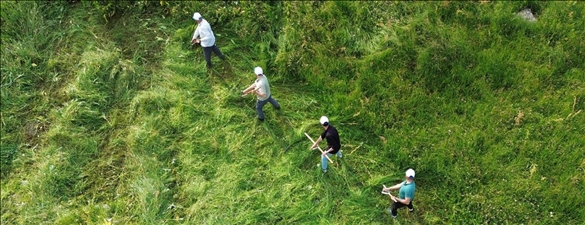
He said drystock farms were facing rising costs, while tillage farmers had endured a difficult harvest.
"We do need a proper assessment done and we need that to be publicized," he said.
Gorman said fodder might need to be moved between regions, adding that the cost of buying feed was a major concern for some farmers.
He also urged the government to support a European Commission fertilizer action plan aimed at easing financial pressure on farms.
"That needs to be supported to the maximum co-funding level to give that buffer of cashflow on farms because some farmers are in a position where to be able to purchase and afford that fodder is an issue," he said.
Warning that conditions had deteriorated in recent weeks, Gorman said: "If you were asking me three weeks ago what the situation was, I would say we're not in a really dire situation yet, but today that has changed."
He urged the committee to meet "straight away" to prevent farmers from facing more serious feed shortages in the autumn.