Solar eclipse to test Europe's grid flexibility amid rising PV generation


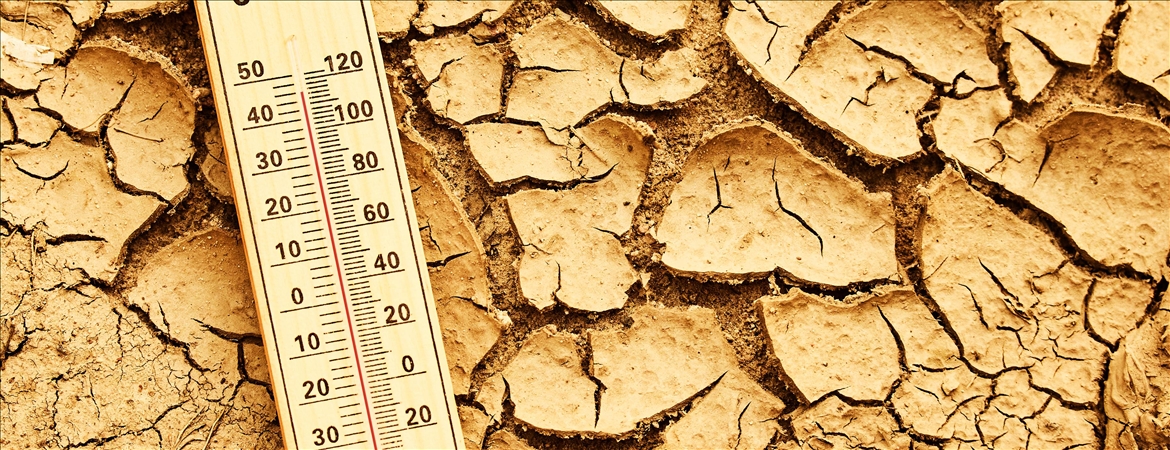
Extreme heat waves and drought continue to intensify across Europe and the UK, disrupting the agriculture, energy and transportation sectors and threatening economic growth amid a resulting decline in labor productivity.
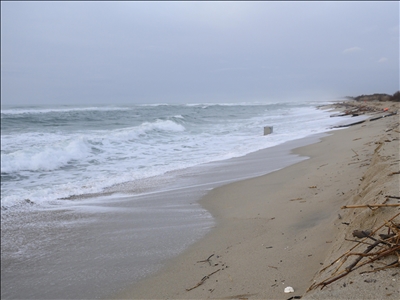
Climate change continues to trigger extreme weather events like heat waves and reduced rainfall in Europe, affecting the continent since May.
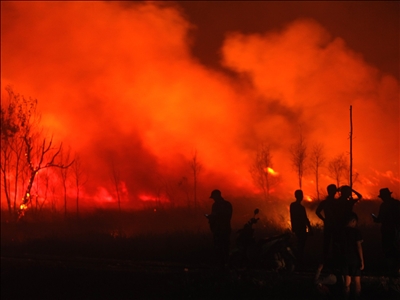
Drought conditions have worsened, river water levels have dropped to historic lows, and wildfires have spread across vast areas since the heat waves began.
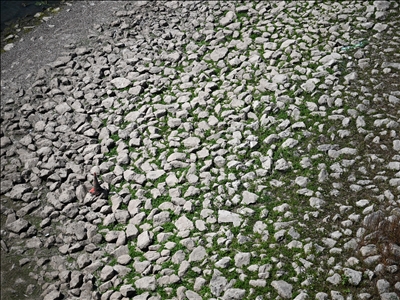
Green areas in Europe and the UK have visibly transformed into barren landscapes amid extreme heat and dry weather.
The average temperature in Western Europe in June and July reached 21.62 degrees Celsius (nearly 71 degrees Fahrenheit), its highest ever for the period, according to the EU’s Copernicus Climate Change Service.
Prolonged high temperatures have dried out the soil even further, while the loss of moisture has created an environment conducive to even higher temperatures, forming a self-perpetuating cycle.
The UK saw exceptionally dry weather in April, followed by an unprecedented series of heat waves in May, June and July.
The UK Environment Agency said July was the driest period ever for the country, while half of England and all of Wales declared sudden and severe drought conditions.
All agricultural sectors were affected by these weather events, according to London-based think tank ECIU.
The 2026 harvest season is expected to be the worst ever recorded for the country.
High heat reduced the moisture needed for kernels to fill out and yields to increase. Wheat, spring barley and oat production could decline by some 2.5 million metric tons, potentially causing a loss of £390 million ($526.5 million) for UK farmers.
Farmer representatives warn that vegetable prices on store shelves could rise.
The total impact of drought and extreme heat on the European economy could reach more significant levels, potentially reducing the EU’s gross domestic product (GDP) by around 1%, according to the Dutch Triodos Bank.
A loss of that caliber would wipe out the EU’s previously projected economic growth for the year, amounting to a loss of around €180 billion ($207.6 billion).
Agriculture and food, energy production, transport and logistics, and labor productivity would play key roles in the economic loss, while the bank expects the largest impact of the extreme heat to stem from a decline in labor productivity in particular.
The bank estimates that the heat could lead to a loss of around 0.6% in the EU economy through its impact on labor productivity.
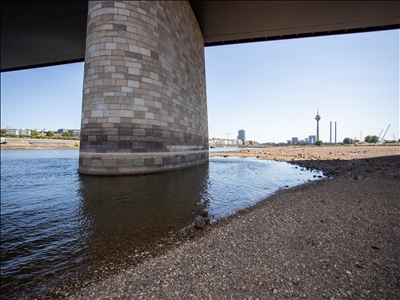
Meanwhile, freight transport is heavily affected by record-low water levels on the Rhine River, one of Europe’s key trade and industrial corridors.
Water levels at Kaub, a critical point on the Rhine, are expected to drop to single digits this week, which could mean that commercial freight transport, passenger vessels and cruise ships may not be able to operate on certain sections of the river, according to the German inland shipping association BDB.
With falling water levels, vessels can carry less cargo, requiring more trips to transport the same volume of goods that vessels might otherwise carry in one trip.
Industrial supply chains are being pressured by the situation, driving up the transport costs of chemicals, steel, coal, petroleum products and other raw materials.
In 2018, the Rhine River saw a similar drop in water levels, resulting in Germany’s economic growth contracting by around 0.3 percentage points over two quarters, according to ING.
Another region suffering from the impact is the Danube River basin — record-low water levels in the Danube due to the drought are affecting both river shipping and electricity production in Central and Eastern Europe.
The water level of the Danube in Budapest dropped to 10 centimeters (3.9 inches), below the previous low of 33 centimeters (12.9 inches) seen in 2018.
Production at Hungary’s Paks Nuclear Power Plant was affected by the low water level, as the plant’s normal output of around 2,000 megawatts dropped to as low as 240 megawatts.
As the Danube’s flow rate fell below one-third of its normal level, one unit at Romania’s Cernavoda Nuclear Power Plant was taken offline, while the capacity of the other unit was reduced.
Serbia’s largest hydroelectric power plant is operating at around 20% of its normal capacity at the same time.
The drought’s impact on electricity production came at the same time as rising demand for electricity due to air conditioning and cooling system needs amid heat waves, pushing electricity prices across the continent well above normal levels.
Extreme heat and water shortages are affecting European agriculture, with various regions seeing massive declines in grain yields and other agricultural products.
Some reports suggest yield losses for some crops reached 6%-7%, while the reduction in production is expected to drive up food prices and also reduce farmers’ wages.
France’s water shortages are spreading to an increasingly wider area. Various monitoring measures and restrictions on water use were imposed in some 99 administrative regions in the EU’s largest agricultural producer, with the situation reaching crisis levels in some 67 of them.
Water restrictions affect various sectors, such as agricultural irrigation and industrial activities, in addition to household use.
France’s economic growth could contract by 1.4 percentage points due to the extreme heat.