Over 31,000 evacuated in southern China amid heavy rains


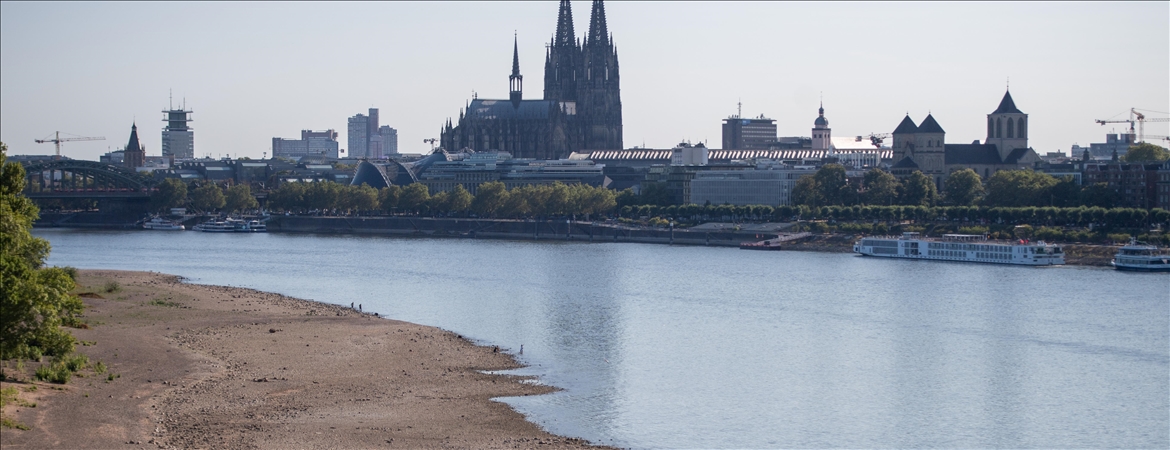
Water levels in German rivers continue to fall, in some cases reaching new record lows, as persistent heat and a lack of rainfall threaten to worsen the situation, public broadcaster ARD reported Wednesday.
Water levels are low across many parts of the country, with new record lows being recorded almost daily.
At the Kaub gauge on the Rhine, between the southwestern cities of Mainz and Koblenz, the water level was measured at just 24 centimeters (9.4 inches), one centimeter below the previous record low set in 2018, according to data from the Federal Waterways and Shipping Administration.
Rhine water levels in Cologne and Duisburg were also below previous record lows Wednesday morning. In Duesseldorf, the water level matched the previous low recorded in 2018.
Forecasts indicate that water levels on the Rhine could fall further in the coming days because of the lack of rainfall.
The situation is also severe in the eastern city of Magdeburg, where the Elbe River fell to its previous record low of 45 centimeters (17.7 inches) at the Magdeburg-Strombruecke gauge.
The level could drop to as low as 40 centimeters (15.7 inches) by Friday, according to estimates.
The Federal Institute of Hydrology said water levels in many river sections had fallen below low-water thresholds “unusually early” this year.
Meanwhile, Klaus Roettcher, an expert on the water cycle and water management, called for a fundamental rethink of how water is managed.
“In the past, we made sure that water drained as quickly as possible toward the oceans,” Roettcher told ARD.
To protect against low water levels resulting from climate change, “we must try to reverse this trend,” he added.
Falling Rhine water levels threaten German economy

The record-low levels are also taking a toll on the wider economy, as Germany faces serious shipping difficulties on the vital Rhine River because of the extreme heat and drought.
According to forecasts published by Germany's Federal Waterways and Shipping Administration (GDWS), the water level at the strategically important Kaub gauge is expected to fall to 18 centimeters (7 inches) on Friday, Aug. 7. The level is forecast to drop to 19 centimeters on Thursday, surpassing the previous record low.
According to reports in the German media, low water levels are limiting the loading capacity of cargo vessels in several sections of the Rhine. Shipping companies are imposing surcharges on top of normal freight rates to compensate for their reduced capacity.
Along with higher freight rates, the need to divide cargo intended for a single vessel among several ships is further increasing logistics costs for wholesale customers.
The situation is prompting wholesalers to reduce purchases to avoid additional expenses, leading to supply problems.
Drought poses risks to raw material transportation
The drought affecting the Rhine, a major artery for transporting critical raw materials such as grain, minerals, ores, coal and petroleum products, directly threatens German industry.
Analysts said low water levels on the Rhine and several other rivers were already severely disrupting freight transportation, noting that river vessels can operate with only a fraction of their normal capacity during droughts.
They said this was causing market bottlenecks, increasing transportation costs and extending delivery times.
Supply chains in key sectors such as chemicals, steel and petroleum are being adversely affected, with potentially severe consequences for the entire German economy, they added.
Economists warned that a prolonged drought would place an additional burden on the German economy, which is already going through a difficult period.
They also said water levels remaining low for an extended period could negatively affect Germany's economic performance in the third quarter.
According to the Kiel Institute for the World Economy (IfW), the macroeconomic effects of the logistics disruptions could reduce gross domestic product by between 0.1% and 0.2% in the third quarter.
Located near the Loreley in the state of Rhineland-Palatinate, the Kaub passage is critically important for inland shipping. The water level there must be at least 1.5 meters (4.9 feet) for cargo vessels to operate at full capacity.
Call for national task force
North Rhine-Westphalia Transport Minister Oliver Krischer called for the establishment of a national task force to rapidly coordinate concrete measures in response to the Rhine's low water levels.
Krischer said urgent discussions were needed on measures including creating additional storage capacity for hazardous materials at ports, expanding rail capacity and determining which cargoes should be prioritized for transportation.
Recalling that a similar approach proved successful during the 2018 drought, Krischer said experts from the logistics industry, local authorities, state governments and the federal government should be brought together.
Warning that the current situation was more dangerous than in previous years, Krischer said: "In 2018, we did not experience the drought until late summer and autumn. This time, however, we are confronting it in the middle of summer. We will probably have to contend with this problem for weeks and months."