Fire bans tighten across Switzerland as new heat wave grips country



More than two-thirds of England is now officially in drought after the country recorded its driest July since records began in 1836.
The East Midlands, Lincolnshire and Northamptonshire, Kent and East Sussex, and Solent and the South Downs were moved into drought status on Monday.
They join around half of England and the whole of Wales, already affected by drought conditions.
The decision was made by the National Drought Group, which brings together regulators, government officials, water companies and agricultural organizations.
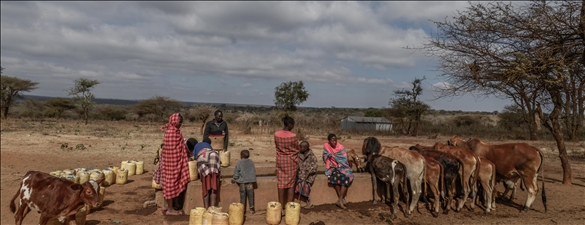
"Along with the areas announced last week, most of the country (71.3%) is now experiencing a flash drought – which develops very quickly brought about by a combination of very low rainfall and higher temperatures," it said.
About 45 million people are now living in drought-affected areas of England, with more than 27 million facing water use restrictions, it noted.
"Drought conditions are worsening and will continue to do so until we see significant and sustained rainfall. We know the hot and dry weather is taking a real toll on farming and there will be long-lasting impacts on our environment," Tony Grayling, chair of the National Drought Group, said in a statement.
Water Minister Emma Hardy, who attended the National Drought Group meeting on Monday, also said: "We know how challenging this summer has been, especially for our hard-working farmers who are at the sharp end of climate change and an increasing number of floods and droughts."
"We are stepping up our support including working to make it easier for farmers to build more on-site irrigation reservoirs. We are also delivering long-term change in the water industry to reduce leaks and deliver nine new reservoirs and water transfer schemes to secure supplies," she underlined.
Heat health alerts have been upgraded across England ahead of a week of soaring temperatures, with highs of up to 36 degrees Celsius (96.8 degrees Fahrenheit) forecast in the southeast on Thursday.
Last month, the UK Health Security Agency (UKHSA) said Britain recorded 2,877 excess deaths during the May and June heat waves, nearly double the 1,504 excess deaths recorded during the summer of 2025.
On July 30, a drought was declared for Wales as a whole amid deteriorating conditions caused by sustained high temperatures, while a drought was also declared last month across half of England following record-low rainfall and prolonged high temperatures.
Major wildfire scorches 140 football pitches in England as heat wave looms
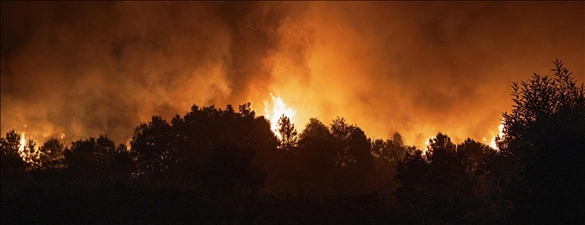
Adding to the strain of the dry conditions, more than 120 firefighters are battling a major heathland wildfire in England's New Forest National Park that has scorched an area of about 1 square kilometer, equivalent to roughly 140 football pitches, authorities said Monday.
The blaze began Sunday afternoon after a van caught fire on the A31, a major road running through the New Forest in southern England. Flames subsequently spread from the vehicle to the surrounding heathland, threatening one of Britain's important wildlife habitats.
Forestry England said the fire is now under control but warned that firefighting operations are expected to continue for several days and urged people to stay away from the affected area.
The fire also caused major disruption on the A31. Police said 23 drivers were forced to abandon their vehicles as the flames took hold, with one woman saying she feared her family's car could catch fire.
National Highways said the road had suffered significant damage and that it was not yet known when the A31 would reopen.
The closure has caused severe congestion on alternative routes through the area. Local roads have become increasingly difficult to navigate, with reports of motorists attempting to tow caravans and even a speedboat through narrow lanes.
Some areas will move to amber heat-health alerts—one level below the highest—from Tuesday as the next heat wave intensifies. The country's national weather agency, the Met Office, is also considering whether to issue extreme heat warnings.