By Nilanjan Dutta
KOLKATA, India
Each time India's national elections come around, some noise is generated about so-called “Bangladeshi infiltrators” in the eastern Indian state West Bengal. This time the noise rose rather late on in the campaign, possibly because political squabbles and financial scandals had taken precedence.
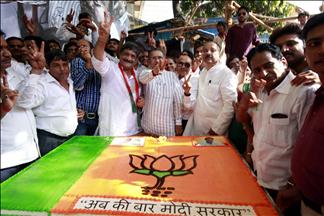
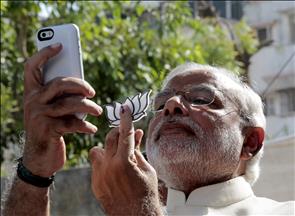
The issue has been spearheaded by the right-wing Hindu nationalist Bharatiya Janata Party. The party was confident of a victory at the Union level, and its prime ministerial candidate Narendra Modi, had also made several campaign tours in West Bengal. In one of his rallies in Serampore in Hooghly district, he thundered: “Those who have come to this state after 1947 should keep their beddings ready. After 16 May, they will all have to go back to their country.”
Only a few days later, he returned to say: “Those who want to take refuge with Mother India and rest their heads on her lap may do so.”
The subtle difference in rhetoric is not difficult to discern for those who have been following the BJP’s election campaigns over the years. “In the BJP’s lexicon, if a migrant from Bangladesh is a Muslim, he is an ‘infiltrator’; if he is a Hindu, he is a ‘refugee’,” senior political analysts say.
Modi had not previously been responsible for leading the BJP campaign in West Bengal and his initial outburst seemed targeted at all who had arrived since the partition of the Indian subcontinent in 1947. It would seem his Bengal colleagues advised him to differentiate so he decided he would become an advocate for a section of migrants from Bangladesh: the Matuas. “What have you done for the Matuas?” he challenged West Bengal chief minister Mamata Banerjee.
The Matuas are a Hindu sect who used to live mostly in East Bengal, which is now Bangladesh, until many moved during India's partition. Since then, they had joined most of the poorer sections of the refugee community in supporting the Left Front but that relationship became embittered, though not totally ruined, after the eviction of a refugee settlement in the Sunderbans forest region led to many Matua dying.
Mamata, as West Bengal's chief minister is known, changed the game altogether. Even before her 2011 state assembly election victory she began to appeal to the Matua by visiting their high priestess, and making her son a minister. What Modi was hinting at when claiming Mamata had done nothing for the Matua, was their lack of citizenship.
The government estimates a fifth of the 10 million Matuas in West Bengal do not have any proof of citizenship. But this is a tricky issue. A law passed during the BJP-led alliance in 2003, when it was last in power, left no scope for anyone who arrived in India without proper documentation after 25 March 1971 – the date of Bangladesh's independence – to gain Indian citizenship. The Matua have demanded the repeal of the act but activists concede "there is little chance that our demands will be fulfilled. Those who are ‘illegal immigrants’ will remain so, and the rest will continue to be pawns in the vote-bank game.”
By choosing 25 March 1971 as the cut-off point, it was assumed that Bangladesh's independence meant the conditions that led to mass migration from East Bengal no longer existed. When Modi wanted to banish all who came after 1947, he was using another logical framework. It assumed that the massive exodus of Hindus from the East to the West and a smaller migration of Muslims in the reverse direction that accompanied Partition had stabilized the population. In both cases, those who came afterwards must have had no legitimate grounds but only ulterior motives.
But migration – whether called illegal or not – did not stop with 1947, nor with 1971. Partition created a 2,200 km border between West Bengal and Bangladesh, of which 600 kilometers is a river-border. It is not possible to totally regulate movements across such a frontier, especially if the people crossing it are desperate. There are mainly two compulsions, says Professor Subhendu Das Gupta, former Head of the Department of South and South-East Asian Studies in Calcutta University. Apart from conflict, many in Bangladesh share the belief that expelling the minority, in this case Hindus, will solve the country's problems. But there is also economic migration, which seems to compel Muslims in particular. Stopping migration, for any reason, has no tried-and-tested solution and regardless, the issue of Bengali migration is very much part of South Asia's historical rupture, Gupta explains.
The railing against “infiltrators” and “illegal immigrants” has been sparked by India's political elite despite the figures they quote – which varies from 10 million to 20 million – being described as exaggerated by researchers at the Indian Statistical Institute. Beneath the media glare, there is tension growing at a grass-roots level. Clashes have occurred over the possession of tiny, almost uninhabitable, pieces of land along canals on Kolkata’s north-eastern fringes. A rape by a few members of the minority immigrant community almost triggered a communal flare-up. Little-known self-proclaimed protection groups mushroom among both communities.
“Ultimately, it is a problem inextricably linked with the history of South Asia,” says Ranabir Samaddar, the director of Calcutta Research Group which has worked extensively on refugee studies.
“When the ‘Partition Refugees’ came here,” he observes, “they were not looked upon as aliens but part of the nation. But those who are coming now are being divided into ‘aliens’ and ‘own people’. This is being done on the basis of religious sentiments. Unless this sentiment is properly addressed, nothing can be done.”
englishnews@aa.com.tr
news_share_descriptionsubscription_contact